Begin of page section:
Page sections:

  • Go to contents (Accesskey 1)
  • Go to position marker (Accesskey 2)
  • Go to main navigation (Accesskey 3)
  • Go to sub navigation (Accesskey 4)
  • Go to additional information (Accesskey 5)
  • Go to page settings (user/language) (Accesskey 8)
  • Go to search (Accesskey 9)

End of this page section. Go to overview of page sections

Begin of page section:
Page settings:

English en
Deutsch de
Search
Login

End of this page section. Go to overview of page sections

Begin of page section:
Search:

Search for details about Uni Graz
Close

End of this page section. Go to overview of page sections


Search

Begin of page section:
Main navigation:

Page navigation:

  • University

    University
    • About the University
    • Organisation
    • Faculties
    • Library
    • Working at University of Graz
    • Campus
    Developing solutions for the world of tomorrow - that is our mission. Our students and our researchers take on the great challenges of society and carry the knowledge out.
  • Research Profile

    Research Profile
    • Our Expertise
    • Research Questions
    • Research Portal
    • Promoting Research
    • Research Transfer
    • Ethics in Research
    Scientific excellence and the courage to break new ground. Research at the University of Graz creates the foundations for making the future worth living.
  • Studies

    Studies
    • Prospective Students
    • Students
  • Community

    Community
    • International
    • Location
    • Research and Business
    • Alumni
    The University of Graz is a hub for international research and brings together scientists and business experts. Moreover, it fosters the exchange and cooperation in study and teaching.
  • Spotlight
Topics
  • Our digital Advent calendar
  • Sustainable University
  • Researchers answer
  • Work for us
Close menu

End of this page section. Go to overview of page sections

Begin of page section:
You are here:

University of Graz Natural sciences Institute of Physics News Hoch hinaus (German only)
  • About the institute
  • Our research
  • Personalities
  • Student Services
  • News
  • Events

End of this page section. Go to overview of page sections

Tuesday, 12 October 2021

Hoch hinaus (German only)

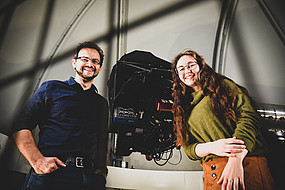
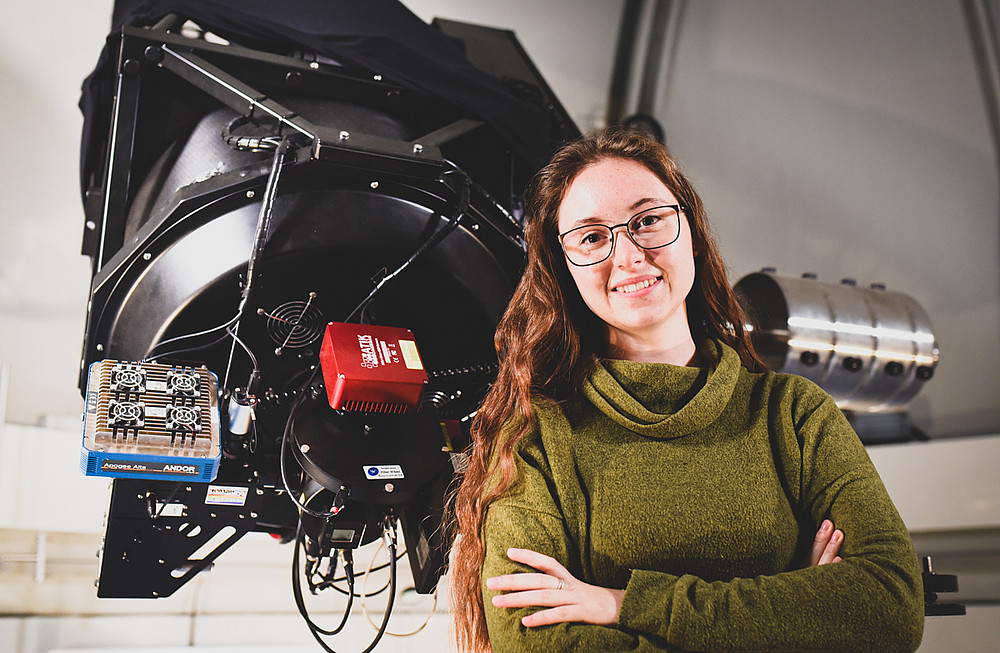
Die Physik-Studentin Victoria Kutnohorsky ist Teil eines Teams, das Mitte Oktober im ESA-Camp in Norwegen eine Höhenforschungsrakete baut. Foto: Uni Graz/Tzivanopoulos

Die Physik-Studentin Victoria Kutnohorsky ist Teil eines Teams, das Mitte Oktober im ESA-Camp in Norwegen eine Höhenforschungsrakete baut. Foto: Uni Graz/Tzivanopoulos

Victoria Kutnohorsky baut an einer Rakete, die Klimadaten aus acht Kilometer Höhe an die Erde schickt

Genau 3394 Kilometer von Graz entfernt, im norwegischen Andøya, konstruieren in nur einer Woche 24 Studierende aus Europa und Kanada eine Höhenforschungsrakete. Der zwei Meter hohe Zylinder soll am 16. Oktober 2021 abheben und in acht Kilometer Höhe wertvolle Wetterdaten an den Boden senden. Mit dabei ist auch Victoria Kutnohorsky, die an der Uni Graz studiert.

Ganz am Anfang der Mission stand ein Posting der European Space Agency (ESA) auf Instagram, den Kutnohorsky auf ihrem Smartphone angeklickt hat. Darin verpackt war ein Aufruf an JungwissenschafterInnen sich freiwillig für den Bau einer Rakete zu melden. „Ich verfasste ein Motivationsschreiben und welche Messtechnik ich mitschicken würde“, erklärt sie. Einige Zeit später bekam sie Rückmeldung, dass sie ins Team aufgenommen wurde und sie konnte am 9. Oktober 2021 nach Andøya in das Space Center der ESA nahe dem Polarkreis reisen. Die Vorbereitungen dafür laufen bereits seit November des vergangenen Jahres. Im Vorfeld konnte sie sich über Webkonferenzen mit den anderen RaketenkonstrukteurInnen austauschen.

„Der Weltraum und die Astrophysik haben mich schon immer sehr interessiert. Bereits in der Schule wusste ich, dass ich etwas Naturwissenschaftliches machen möchte“, betont Kutnohorsky. Gesagt, getan: Seit 2018 ist sie NAWIGraz-Studierende im Fach Physik und schreibt in ihrer Bachelorarbeit aktuell über Exoplaneten, also über Himmelskörper, die sich außerhalb unseres Sonnensystems befinden. Dazu verbringt die Jungforscherin immer wieder ganze Nächte mit Sternenbeobachtung im Observatorium Lustbühel.

In Norwegen ist die junge Oberösterreicherin Teil der Gruppe, die sich mit Messgeräten und den Sensoren an Bord der Mini-Rakete beschäftigt. „Wir schicken insgesamt acht Sensoren mit. Darunter Instrumente für die Temperaturmessung, einen Druck- und einen Lichtsensor und auch GPS für die Orientierung“, erzählt sie. Ein anderes Team kümmert sich um den Antrieb, andere berechnen die Flugbahn der Rakete. Für die Physikstudentin hat die Reise einen Mehrwert: Neben dem Erlebnis so hoch im Norden Europas am „Fly a rocket“-Programm der ESA teilnehmen zu können, möchte Kutnohorsky die Messdaten auch nachhaltig verwerten. „Ich hoffe wir können genug Informationen sammeln, damit ich sie in einer Vorlesung zum Thema Klimaphysik meinen Mitstudierenden präsentieren kann.“

Mehr Informationen: https://www.esa.int/Education/Fly_A_Rocket
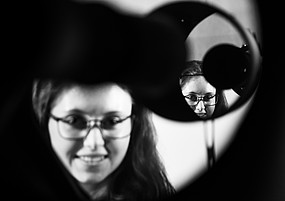
Blick in den Spiegel des ASA-Teleskops am Observatorium Lustbühel in Graz. Foto: Uni Graz/Tzivanopoulos
Victoria Kutnohorsky schreibt ihre Bachelorarbeit bei Paul Beck am Institut für Physik. Foto: Uni Graz/Tzivanopoulos
created by Konstantin Tzivanopoulos

Related news

New FWF – WEAVE Project "Longer Acenes: Synthesis, Interfaces, and Thin Films"

Unlocking the Potential of Longer Acenes: A New Era in Organic Electronics

Two Awards for an Outstanding Dissertation

Andreas Windischbacher received two prestigious awards for his outstanding doctoral dissertation. On March 17th, 2025, he was presented with the golden ring of honour of the Republic of Austria by our Federal President as part of the Promotio sub auspiciis Praesidentis rei publicae. On the same day, he was also selected for the Josef Krainer Förderungspreis, whose ceremonial presentation, however, took place later on November 12th, 2025.

NanoGraz Careers & Ideas Days 2025: Career paths after the doctorate

On October 13 and 14, the consortium NanoGraz of the Research Career Campus at the University of Graz organized a two-day event to inform the consortium's doctoral students about their career options after completing their doctorate. In addition to exciting lectures by early-career researchers as well as representatives from industry, the Austrian Science Fund (FWF), and the research management of the University of Graz, a brainstorming competition took place on the second day, in which the participants had the opportunity to develop their own joint mini-projects.

Seed-Funding Grant: Bringing Ideas to Life Together

With the new OpNaQ Seed-Funding Grant, the OpNaQ Group, part of the Institute of Physics, lifts collaboration within the research group to a whole new level, and supports sub-groups in turning their ideas into concrete projects.

Begin of page section:
Additional information:

University of Graz
Universitaetsplatz 3
8010 Graz
Austria
  • Contact
  • Web Editors
  • Moodle
  • UNIGRAZonline
  • Imprint
  • Data Protection Declaration
  • Accessibility Declaration
Weatherstation
Uni Graz

End of this page section. Go to overview of page sections

End of this page section. Go to overview of page sections

Begin of page section:

End of this page section. Go to overview of page sections