Begin of page section:
Page sections:

  • Go to contents (Accesskey 1)
  • Go to position marker (Accesskey 2)
  • Go to main navigation (Accesskey 3)
  • Go to sub navigation (Accesskey 4)
  • Go to additional information (Accesskey 5)
  • Go to page settings (user/language) (Accesskey 8)
  • Go to search (Accesskey 9)

End of this page section. Go to overview of page sections

Begin of page section:
Page settings:

English en
Deutsch de
Search
Login

End of this page section. Go to overview of page sections

Begin of page section:
Search:

Search for details about Uni Graz
Close

End of this page section. Go to overview of page sections


Search

Begin of page section:
Main navigation:

Page navigation:

  • University

    University
    • About the University
    • Organisation
    • Faculties
    • Library
    • Working at University of Graz
    • Campus
    Developing solutions for the world of tomorrow - that is our mission. Our students and our researchers take on the great challenges of society and carry the knowledge out.
  • Research Profile

    Research Profile
    • Our Expertise
    • Research Questions
    • Research Portal
    • Promoting Research
    • Research Transfer
    • Ethics in Research
    Scientific excellence and the courage to break new ground. Research at the University of Graz creates the foundations for making the future worth living.
  • Studies

    Studies
    • Prospective Students
    • Students
  • Community

    Community
    • International
    • Location
    • Research and Business
    • Alumni
    The University of Graz is a hub for international research and brings together scientists and business experts. Moreover, it fosters the exchange and cooperation in study and teaching.
  • Spotlight
Topics
  • Our digital Advent calendar
  • Sustainable University
  • Researchers answer
  • Work for us
Close menu

End of this page section. Go to overview of page sections

Begin of page section:
You are here:

University of Graz Natural sciences Institute of Physics News Im Brennpunkt der Sonnenforschung
  • About the institute
  • Our research
  • Personalities
  • Student Services
  • News
  • Events

End of this page section. Go to overview of page sections

Thursday, 28 July 2016

Im Brennpunkt der Sonnenforschung

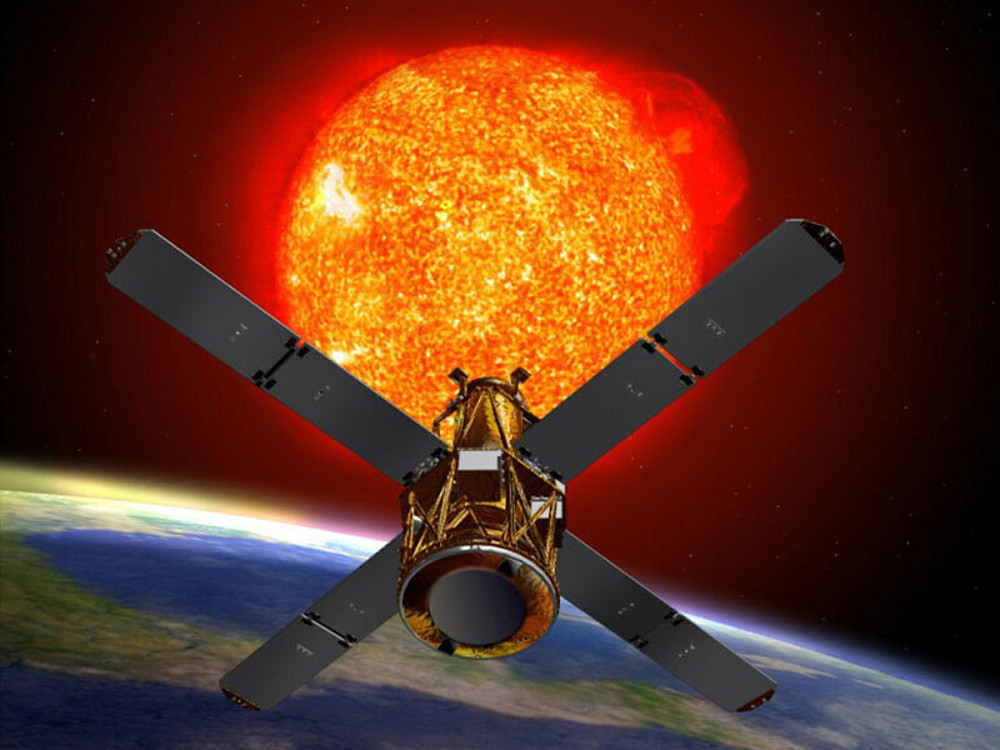
Der NASA-Satellit RHESSI misst die Strahlung bei Sonnenausbrüchen. PhysikerInnen aus aller Welt präsentieren diese Woche in Graz ihre neuesten Forschungsergebnisse dazu. Foto: NASA

Der NASA-Satellit RHESSI misst die Strahlung bei Sonnenausbrüchen. PhysikerInnen aus aller Welt präsentieren diese Woche in Graz ihre neuesten Forschungsergebnisse dazu. Foto: NASA

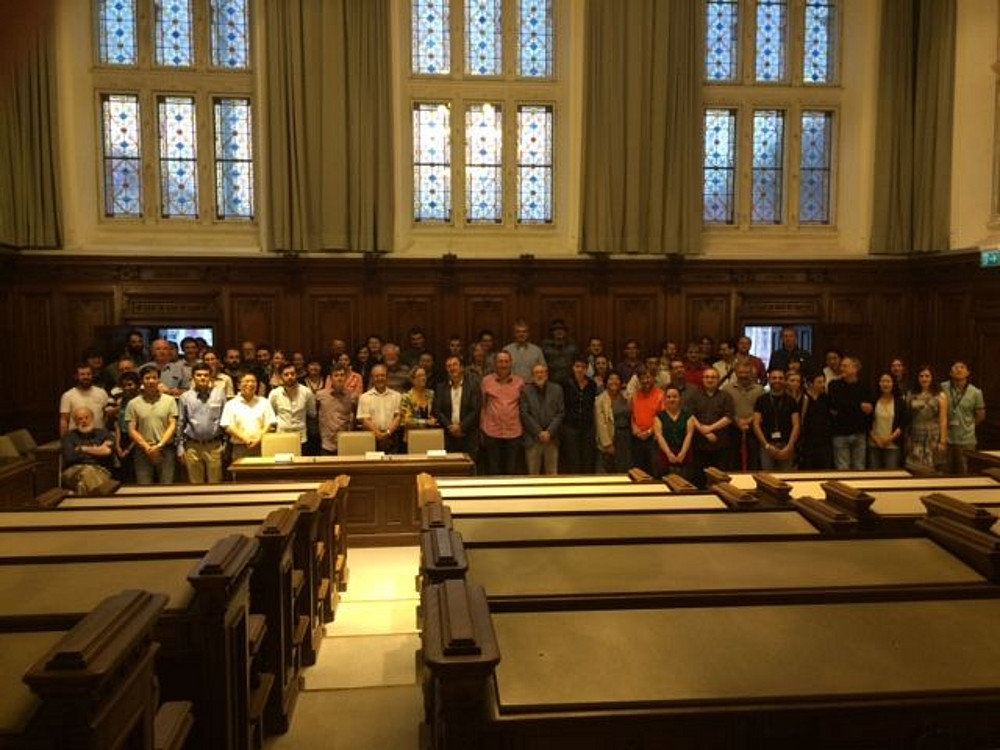
Frau Dr Kopera begrüßt am 29.7.2016 in Vertretung des Bürgermeisters von Graz die Teilnehmer des RHESSI Workshops. (Foto: Hanslmeier)

Frau Dr Kopera begrüßt am 29.7.2016 in Vertretung des Bürgermeisters von Graz die Teilnehmer des RHESSI Workshops. (Foto: Hanslmeier)

Tagung zu Strahlungsausbrüchen erstmals in Österreich

Die Uni Graz ist diese Woche im Zentrum der Sonnenforschung: 80 AstrophysikerInnen aus 16 Ländern tauschen ihre neuesten Erkenntnisse über Strahlungsausbrüche – so genannte Flares – der Sonne aus. Das zentrale Thema dieses 15. RHESSI-Workshops, der heuer erstmals in Österreich stattfindet, ist die Röntgen- und Gammastrahlung, die der NASA-Satellit RHESSI (Ramaty High Energy Solar Spectroscopic Imager) misst. „Strahlungsausbrüche treten oft in Zusammenhang mit koronalen Massenauswürfen und Sonnenstürmen auf, und zählen zu den stärksten Explosionen in unserem Sonnensystem“, erklärt Tagungsorganisatorin Astrid Veronig vom Institut für Physik der Uni Graz. Bei solchen Ausbrüchen emittieren beschleunigte Elektronen und Ionen die hochenergetische Strahlung, die der RHESSI-Satellit seit 2002 misst.

Viele der aktuellen Forschungsthemen, die auf dieser Tagung diskutiert werden, dienen bereits zur Vorbereitung auf die bahnbrechende Solar Orbiter Mission der Europäischen Weltraumbehörde ESA, die im Oktober 2018 starten wird. Solar Orbiter wird dabei näher zur Sonne fliegen als jede bisherige Mission, und die Sonne von einer Umlaufbahn innerhalb der des innersten Planeten Merkur mit bisher unerreichter Auflösung beobachten. Die Wissenschaftssoftware für das Röntgenteleskop STIX auf Solar Orbiter wird unter Federführung der von Veronig geleiteten Arbeitsgruppe Astrophysik der Uni Graz entwickelt. Das Teleskop selbst wird unter Schweizer Leitung gebaut.

created by Dagmar Eklaude & Astrid Veronig

Related news

New FWF – WEAVE Project "Longer Acenes: Synthesis, Interfaces, and Thin Films"

Unlocking the Potential of Longer Acenes: A New Era in Organic Electronics

Two Awards for an Outstanding Dissertation

Andreas Windischbacher received two prestigious awards for his outstanding doctoral dissertation. On March 17th, 2025, he was presented with the golden ring of honour of the Republic of Austria by our Federal President as part of the Promotio sub auspiciis Praesidentis rei publicae. On the same day, he was also selected for the Josef Krainer Förderungspreis, whose ceremonial presentation, however, took place later on November 12th, 2025.

NanoGraz Careers & Ideas Days 2025: Career paths after the doctorate

On October 13 and 14, the consortium NanoGraz of the Research Career Campus at the University of Graz organized a two-day event to inform the consortium's doctoral students about their career options after completing their doctorate. In addition to exciting lectures by early-career researchers as well as representatives from industry, the Austrian Science Fund (FWF), and the research management of the University of Graz, a brainstorming competition took place on the second day, in which the participants had the opportunity to develop their own joint mini-projects.

Seed-Funding Grant: Bringing Ideas to Life Together

With the new OpNaQ Seed-Funding Grant, the OpNaQ Group, part of the Institute of Physics, lifts collaboration within the research group to a whole new level, and supports sub-groups in turning their ideas into concrete projects.

Begin of page section:
Additional information:

University of Graz
Universitaetsplatz 3
8010 Graz
Austria
  • Contact
  • Web Editors
  • Moodle
  • UNIGRAZonline
  • Imprint
  • Data Protection Declaration
  • Accessibility Declaration
Weatherstation
Uni Graz

End of this page section. Go to overview of page sections

End of this page section. Go to overview of page sections

Begin of page section:

End of this page section. Go to overview of page sections