Begin of page section:
Page sections:

  • Go to contents (Accesskey 1)
  • Go to position marker (Accesskey 2)
  • Go to main navigation (Accesskey 3)
  • Go to sub navigation (Accesskey 4)
  • Go to additional information (Accesskey 5)
  • Go to page settings (user/language) (Accesskey 8)
  • Go to search (Accesskey 9)

End of this page section. Go to overview of page sections

Begin of page section:
Page settings:

English en
Deutsch de
Search
Login

End of this page section. Go to overview of page sections

Begin of page section:
Search:

Search for details about Uni Graz
Close

End of this page section. Go to overview of page sections


Search

Begin of page section:
Main navigation:

Page navigation:

  • University

    University
    • About the University
    • Organisation
    • Faculties
    • Library
    • Working at University of Graz
    • Campus
    Developing solutions for the world of tomorrow - that is our mission. Our students and our researchers take on the great challenges of society and carry the knowledge out.
  • Research Profile

    Research Profile
    • Our Expertise
    • Research Questions
    • Research Portal
    • Promoting Research
    • Research Transfer
    • Ethics in Research
    Scientific excellence and the courage to break new ground. Research at the University of Graz creates the foundations for making the future worth living.
  • Studies

    Studies
    • Prospective Students
    • Students
  • Community

    Community
    • International
    • Location
    • Research and Business
    • Alumni
    The University of Graz is a hub for international research and brings together scientists and business experts. Moreover, it fosters the exchange and cooperation in study and teaching.
  • Spotlight
Topics
  • Our digital Advent calendar
  • Sustainable University
  • Researchers answer
  • Work for us
Close menu

End of this page section. Go to overview of page sections

Begin of page section:
You are here:

University of Graz Natural sciences Institute of Physics News Planet vor der Linse
  • About the institute
  • Our research
  • Personalities
  • Student Services
  • News
  • Events

End of this page section. Go to overview of page sections

Monday, 09 May 2016

Planet vor der Linse

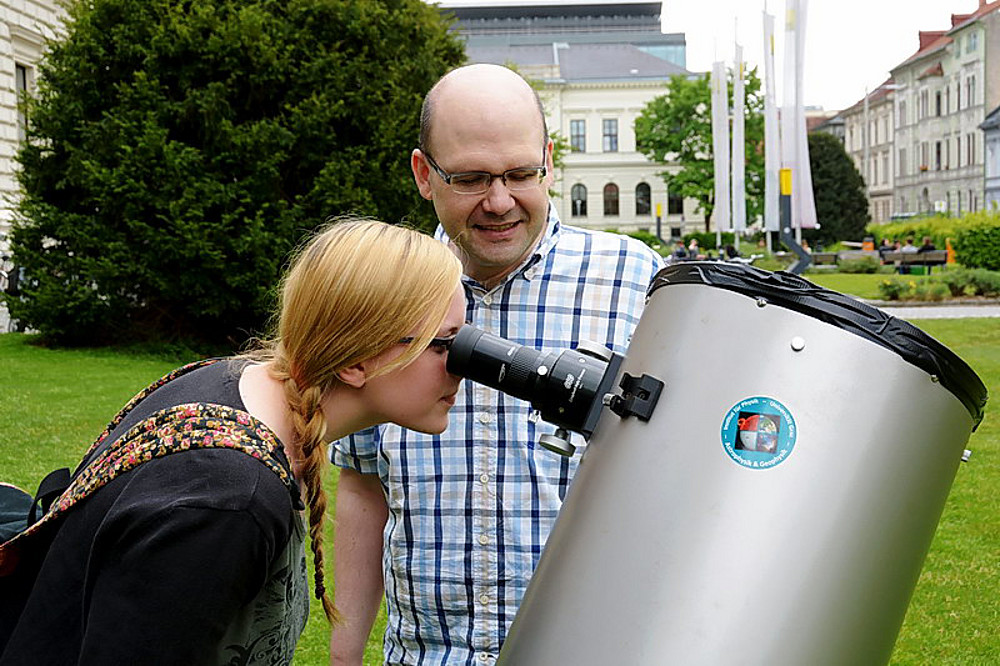
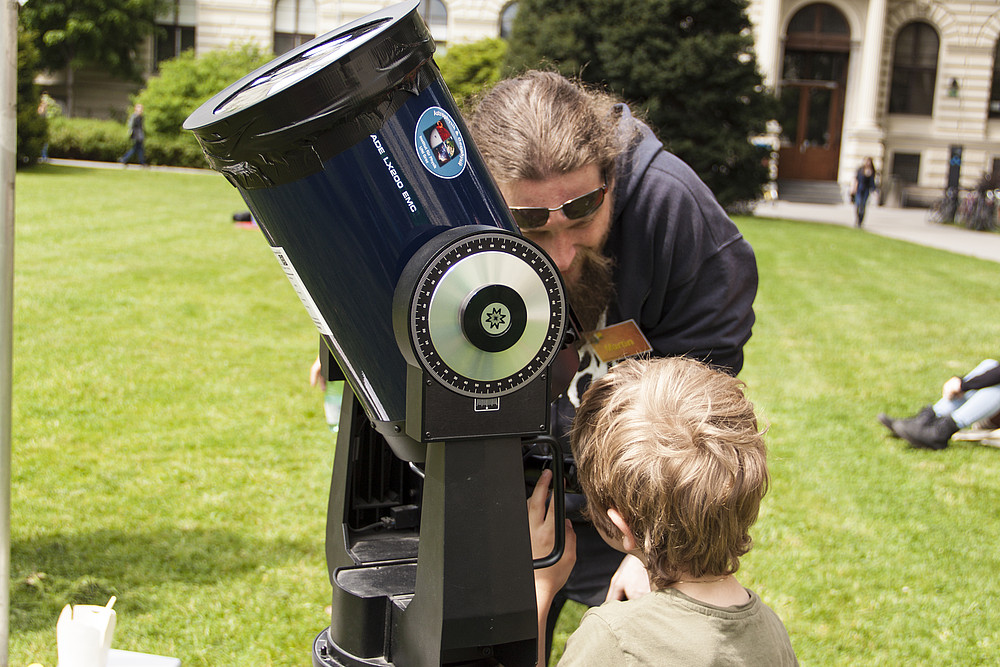
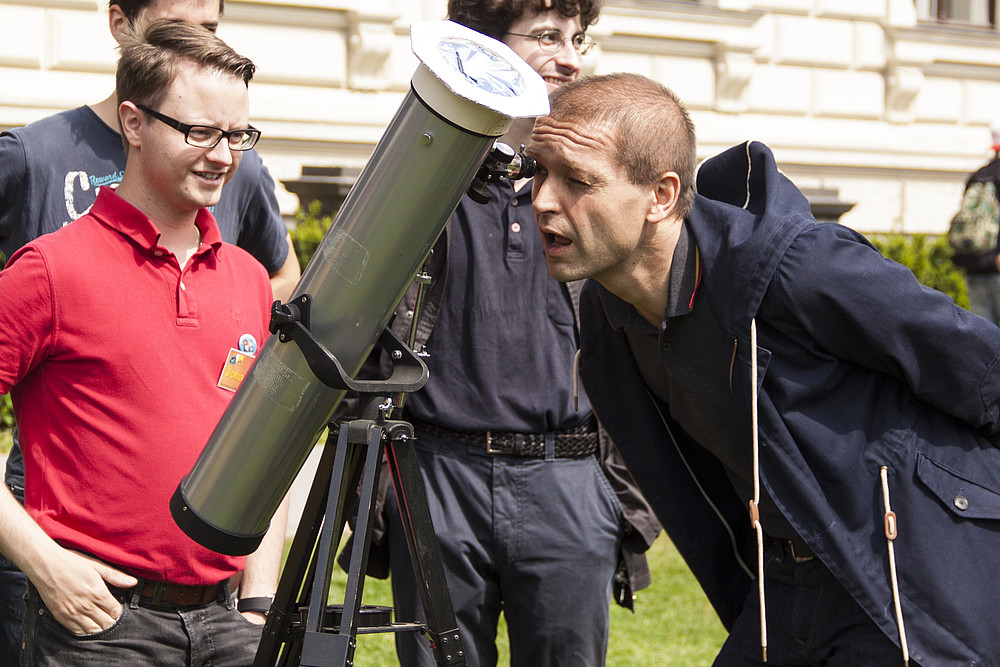
Thorsten Ratzka vom IGAM mit einer interessierten Besucherin. Fotos: Uni Graz/cp-pictures ©CP-PICTURES

Thorsten Ratzka vom IGAM mit einer interessierten Besucherin

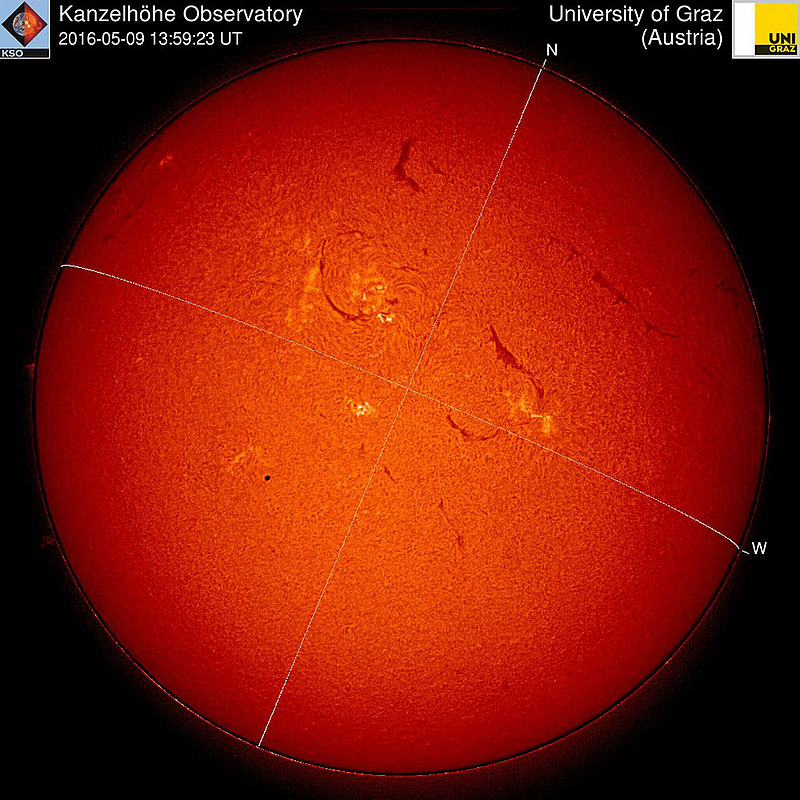
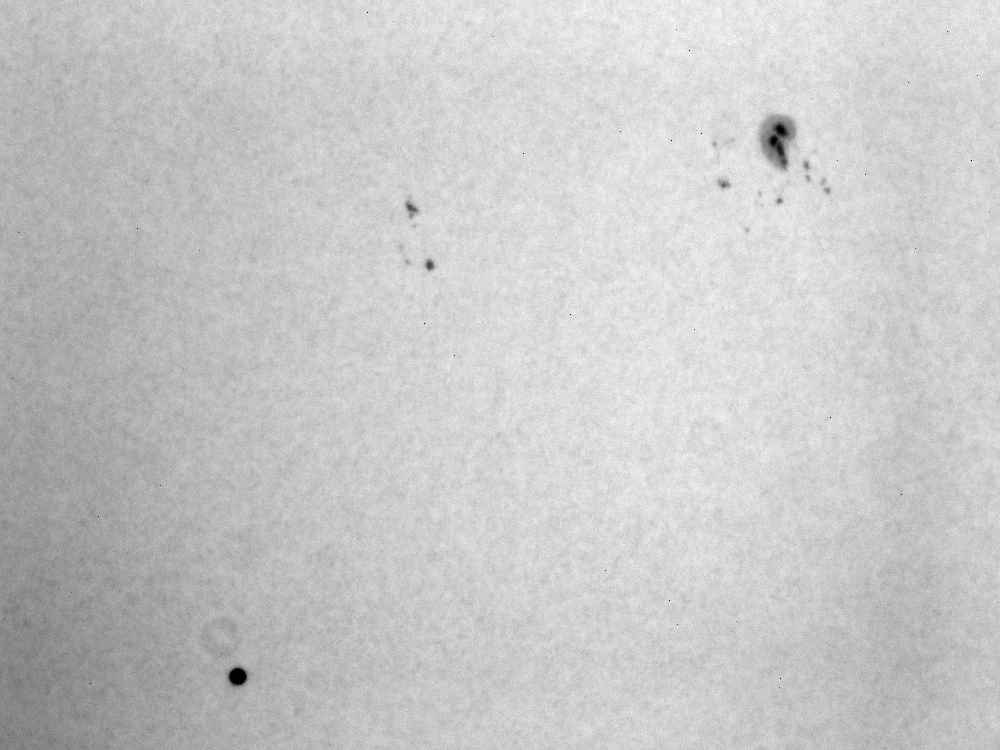
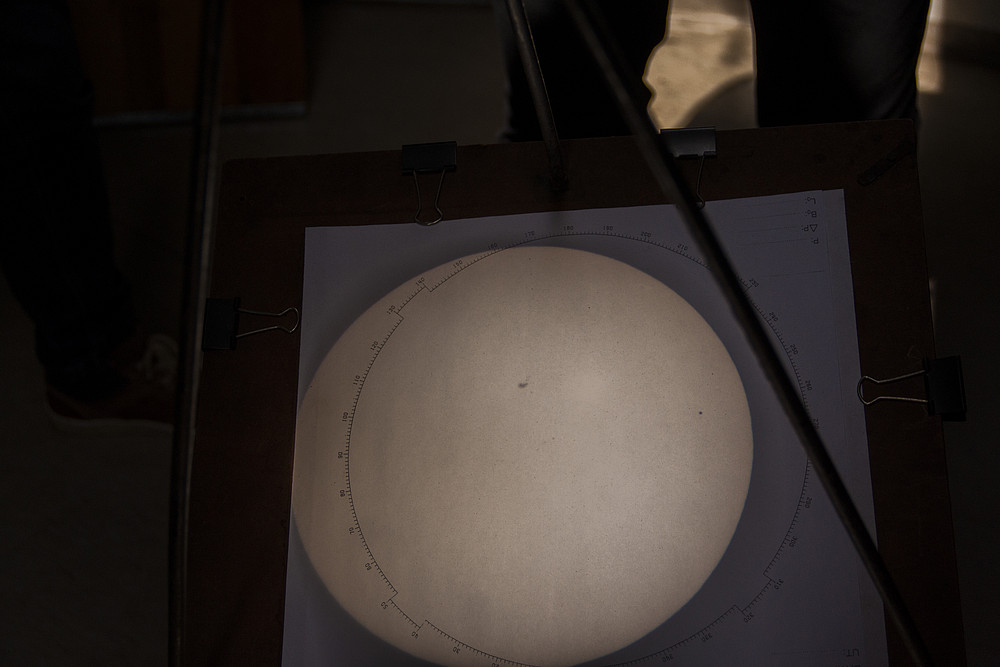
Live-Bild vom Sonnenobservatorium Kanzelhöhe: Merkur ist im Teleskop als kleiner schwarzer Punkt vor der Sonnenscheibe zu sehen. Foto: Uni Graz/IGAM, Kanzelhöhe ©Uni Graz/IGAM

Live-Bild vom Sonnenobservatorium Kanzelhöhe: Merkur ist im Teleskop als kleiner schwarzer Punkt vor der Sonnenscheibe zu sehen. Foto: Uni Graz/IGAM, Kanzelhöhe

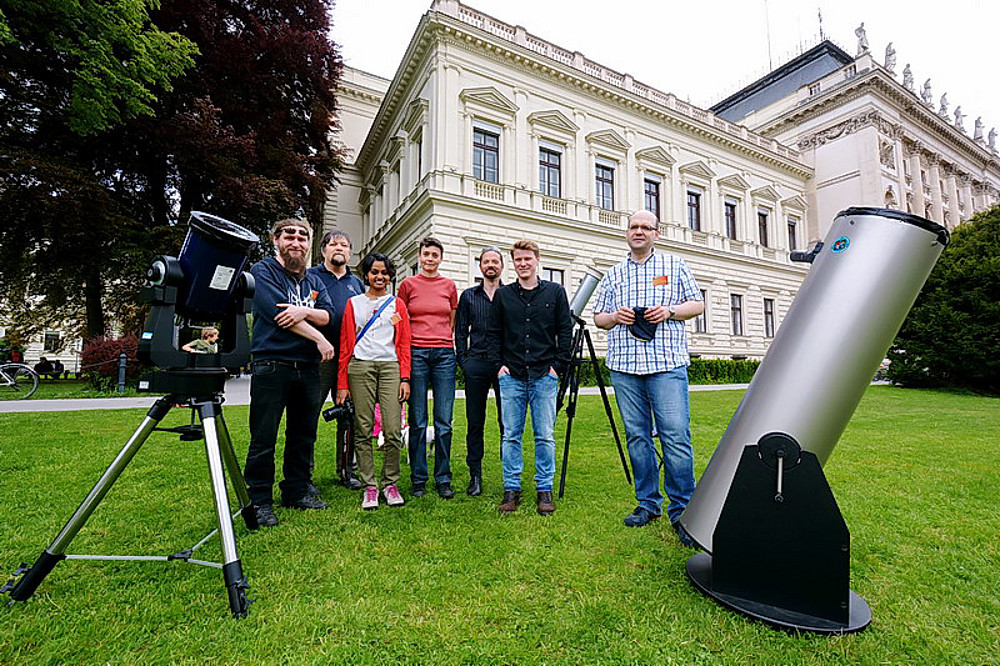
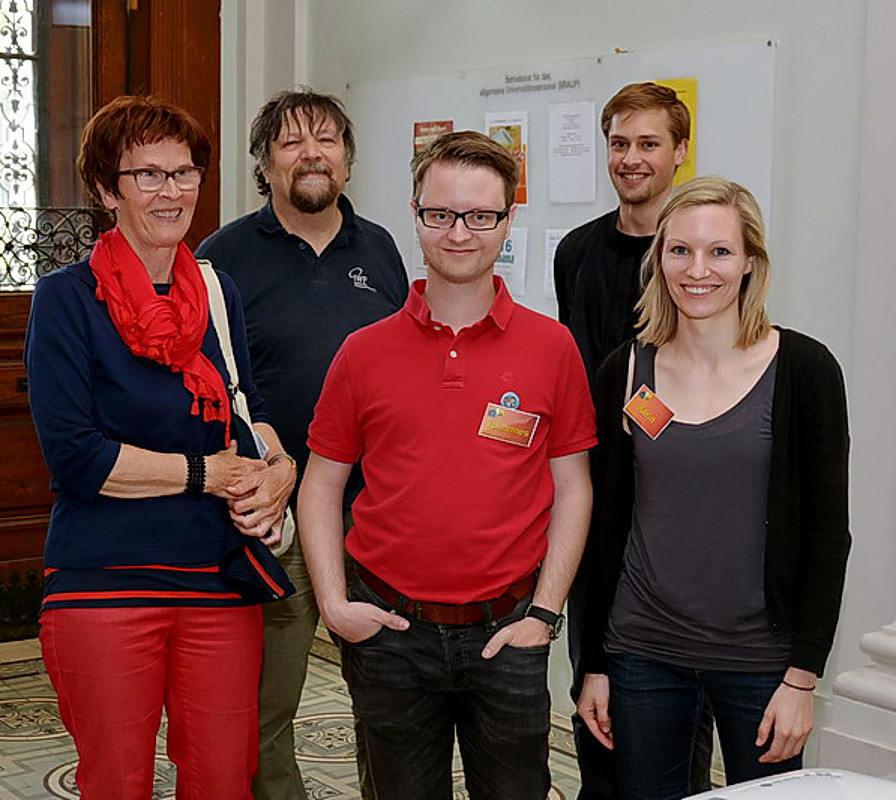
Die WissenschafterInnen des IGAM konnten auch mit Fragen gelöchert werden. Für weitere Fotos aufs Bild und dann auf die Bildleiste unten klicken! ©CP-PICTURES

Die WissenschafterInnen des IGAM konnten auch mit Fragen gelöchert werden. Für weitere Fotos aufs Bild und dann auf die Bildleiste unten klicken!

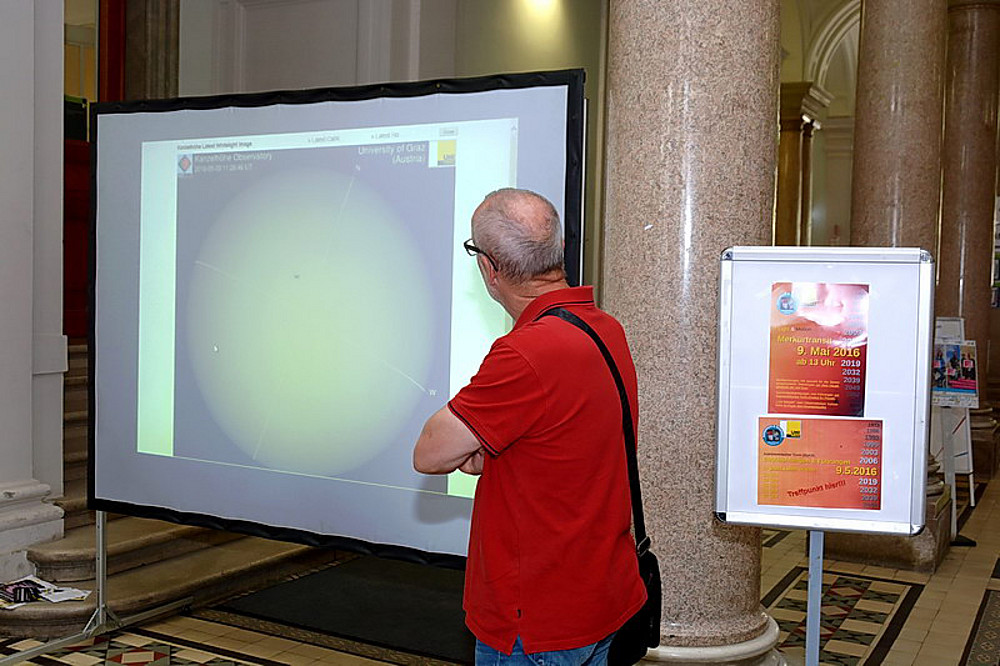
Indoor waren Aufnahmen vom Sonnenobservatorium Kanzelhöhe zu sehen ... ©CP-PICTURES

Indoor waren Aufnahmen vom Sonnenobservatorium Kanzelhöhe zu sehen ...

Auch hier gab's fachkundige Informationen. ©CP-PICTURES

Auch hier gab's fachkundige Informationen.

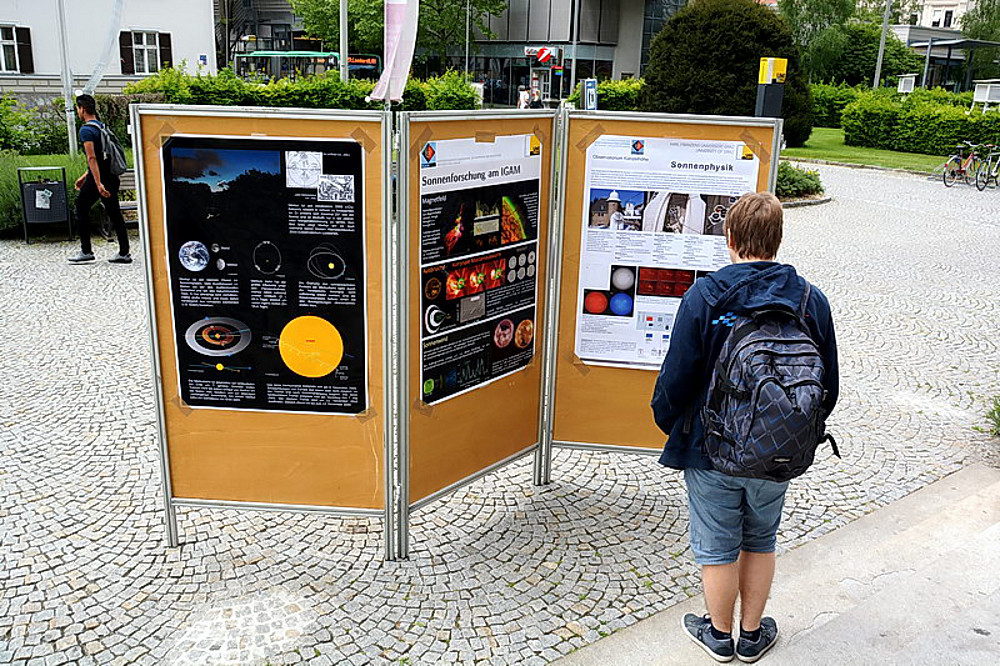
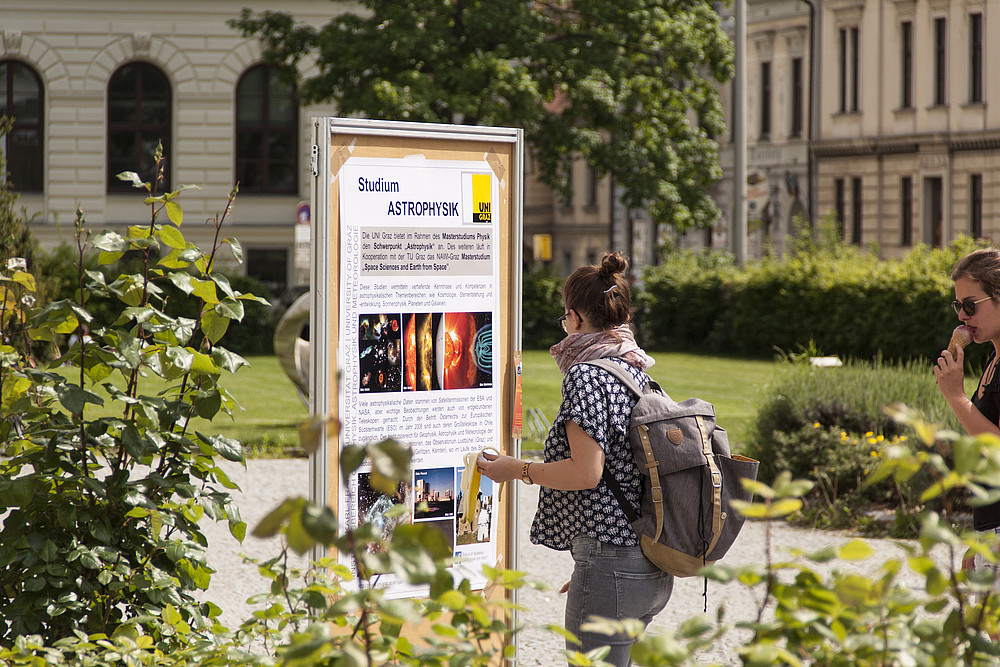
... ebenso auf den Postern vor dem Hauptgebäude. ©CP-PICTURES

... ebenso auf den Postern vor dem Hauptgebäude.

Aufnahme vom 9.5.2016 um 15:33 Uhr vom Observatorium Lustbühel aus

Aufnahme vom 9.5.2016 um 15:33 Uhr vom Observatorium Lustbühel aus. Foto: IGAM

auch junge Besucher waren fasziniert

Auch junge Besucher waren fasziniert. Foto: IGAM

ebenso Dekan Gattringer

ebenso Dekan Gattringer. Foto: IGAM

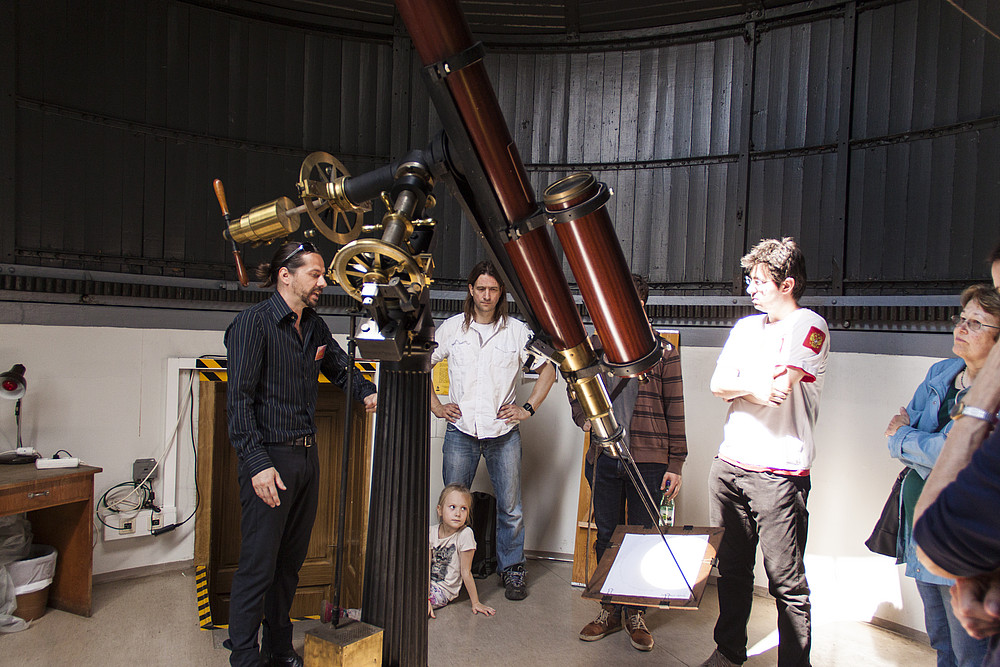
Klaus Huber vom IGAM führt Besucher zum astronomischen Turm

Klaus Huber vom IGAM führte interessierte Besucher zum astronomischen Turm. Foto: IGAM

am astronomischen Turm

am astronomischen Turm Foto: IGAM

Werbung für ein Physik Studium inklusive

Werbung für ein Physik Studium inklusive. Foto: IGAM

Astronomie-Begeisterte beobachteten an der Uni Graz den Merkurtransit

Nach zehn Jahren war es am 9. Mai 2016 wieder soweit: Merkur, der kleinste Planet unseres Sonnensystems, schob sich - von Graz aus gesehen - ab 13.12 Uhr zwischen Sonne und Erde. Das als "Merkurtransit" bezeichnete Phänomen lockte viele Astronomie-Fans auf den Campus der Karl-Franzens-Universität, wo Teleskope mit speziellen Sonnenfiltern einen Blick auf das Ereignis ermöglichten, sofern es die immer wieder vorbeiziehenden Wolken erlaubten. Im Foyer des Hauptgebäudes gab es außerdem Live-Bilder vom Sonnenobservatorium auf der Kanzelhöhe in Kärnten zu sehen. Und bei Führungen am Astronomischen Turm waren Beobachtungen mit dem historischen Refraktor möglich.


Und auch das Webradio der Grazer Universitäten berichtete über den Merkurtransit.

>> Um den Beitrag gleich anzuhören, klicken Sie bitte hier

ebenso ein ORF Bericht

>> Um den ORF Beitrag zu lesen, klicken Sie bitte hier

Für weitere Bilder klicken Sie bitte das 3. Bild an - darunter erscheint eine verkleinerte Auswahl der weiteren Fotos!

created by Gerhild Kastrun & Gudrun Pichler

Related news

New FWF – WEAVE Project "Longer Acenes: Synthesis, Interfaces, and Thin Films"

Unlocking the Potential of Longer Acenes: A New Era in Organic Electronics

Two Awards for an Outstanding Dissertation

Andreas Windischbacher received two prestigious awards for his outstanding doctoral dissertation. On March 17th, 2025, he was presented with the golden ring of honour of the Republic of Austria by our Federal President as part of the Promotio sub auspiciis Praesidentis rei publicae. On the same day, he was also selected for the Josef Krainer Förderungspreis, whose ceremonial presentation, however, took place later on November 12th, 2025.

NanoGraz Careers & Ideas Days 2025: Career paths after the doctorate

On October 13 and 14, the consortium NanoGraz of the Research Career Campus at the University of Graz organized a two-day event to inform the consortium's doctoral students about their career options after completing their doctorate. In addition to exciting lectures by early-career researchers as well as representatives from industry, the Austrian Science Fund (FWF), and the research management of the University of Graz, a brainstorming competition took place on the second day, in which the participants had the opportunity to develop their own joint mini-projects.

Seed-Funding Grant: Bringing Ideas to Life Together

With the new OpNaQ Seed-Funding Grant, the OpNaQ Group, part of the Institute of Physics, lifts collaboration within the research group to a whole new level, and supports sub-groups in turning their ideas into concrete projects.

Begin of page section:
Additional information:

University of Graz
Universitaetsplatz 3
8010 Graz
Austria
  • Contact
  • Web Editors
  • Moodle
  • UNIGRAZonline
  • Imprint
  • Data Protection Declaration
  • Accessibility Declaration
Weatherstation
Uni Graz

End of this page section. Go to overview of page sections

End of this page section. Go to overview of page sections

Begin of page section:

End of this page section. Go to overview of page sections