Begin of page section:
Page sections:

  • Go to contents (Accesskey 1)
  • Go to position marker (Accesskey 2)
  • Go to main navigation (Accesskey 3)
  • Go to sub navigation (Accesskey 4)
  • Go to additional information (Accesskey 5)
  • Go to page settings (user/language) (Accesskey 8)
  • Go to search (Accesskey 9)

End of this page section. Go to overview of page sections

Begin of page section:
Page settings:

English en
Deutsch de
Search
Login

End of this page section. Go to overview of page sections

Begin of page section:
Search:

Search for details about Uni Graz
Close

End of this page section. Go to overview of page sections


Search

Begin of page section:
Main navigation:

Page navigation:

  • University

    University
    • About the University
    • Organisation
    • Faculties
    • Library
    • Working at University of Graz
    • Campus
    Developing solutions for the world of tomorrow - that is our mission. Our students and our researchers take on the great challenges of society and carry the knowledge out.
  • Research Profile

    Research Profile
    • Our Expertise
    • Research Questions
    • Research Portal
    • Promoting Research
    • Research Transfer
    • Ethics in Research
    Scientific excellence and the courage to break new ground. Research at the University of Graz creates the foundations for making the future worth living.
  • Studies

    Studies
    • Prospective Students
    • Students
  • Community

    Community
    • International
    • Location
    • Research and Business
    • Alumni
    The University of Graz is a hub for international research and brings together scientists and business experts. Moreover, it fosters the exchange and cooperation in study and teaching.
  • Spotlight
Topics
  • Our digital Advent calendar
  • Sustainable University
  • Researchers answer
  • Work for us
Close menu

End of this page section. Go to overview of page sections

Begin of page section:
You are here:

University of Graz Natural sciences Institute of Physics News Professur Theoretische Physik 2 (Nichtperturbative Quantenfeldtheorie) neu besetzt
  • About the institute
  • Our research
  • Personalities
  • Student Services
  • News
  • Events

End of this page section. Go to overview of page sections

Thursday, 09 October 2014

Professur Theoretische Physik 2 (Nichtperturbative Quantenfeldtheorie) neu besetzt

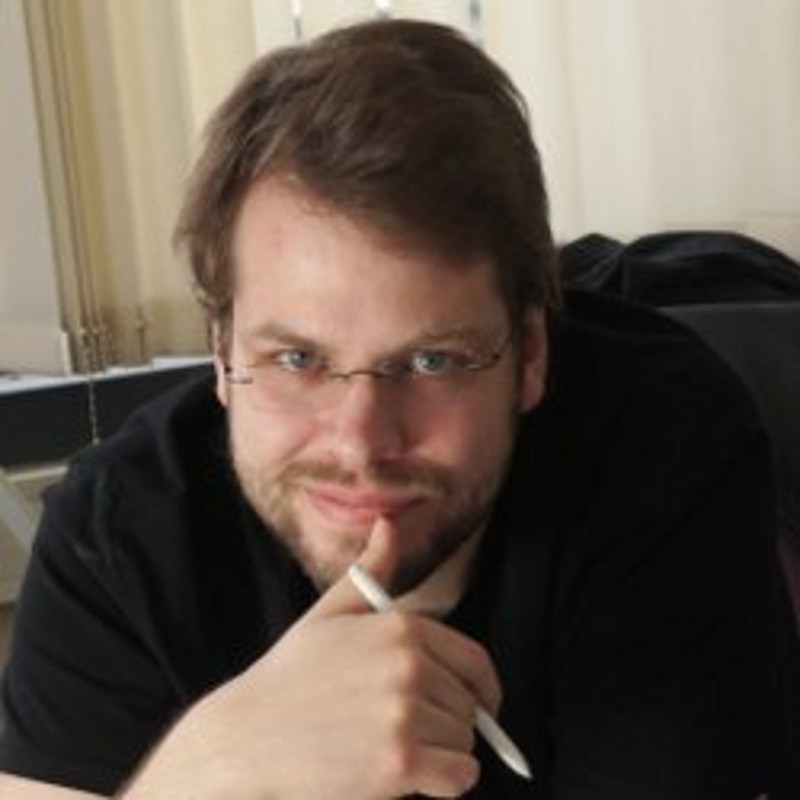
Prof. Axel Maas

Prof. Axel Maas

Prof. Axel Maas übernimmt die Nachfolge von Prof. Christian Lang

Die Forschungsaktivitäten von Prof. Maas umfassen viele Teilbereiche der Elementarteilchenphysik, von der Theorie der Starken Wechselwirkung bis zur Beschreibung der Physik des Higgs-Bosons im und jenseits des Standardmodells.

Herr Prof. Axel Maas wurde in Frankfurt am Main geboren. Nach seinem Abitur absolvierte er ein Diplomstudium in Physik an der Universität Darmstadt, das er mit einer experimentellen Diplomarbeit über „Particle Identification with RICH Detectors“ unter Prof. Braun-Munziger abschloss. Im anschließenden Doktoratsstudium wandte er sich der theoretischen Elementarteilchenphysik zu und verfertigte, betreut von Prof. Wambach, seine Doktorarbeit mit dem Titel „The High-Temperature Phase of Yang-Mills Theory in Landau Gauge“. Nach 1 Jahr als Postdoc an der Universität in Darmstadt folgten Postdoc-Stellen an der Universität Sao Paolo und der Slovakischen Akademie für Wissenschaften in Bratislava. Im Anschluss daranverbrachte er 3 Jahre, davon 2 Jahre als Lise-Meitner-Stipendiat, am Institut für Physik der Universität Graz, wo er 2011 im Fach „Physik“ habilitierte. Von 2011 bis 2014 hatte er eine DFG-finanzierte Stelle als Projektgruppenleiter an der Universität Jena inne, Ende 2013 wurde ihm ein Heisenberg-Stipendium zuerkannt.

Das unmittelbare Interesse von Prof. Maas konzentriert sich vor allem auf die nicht-störungstheoretische Behandlung von Quantenfeldtheorien und damit vorhersagbaren Phänomenen in der Elementarteilchenphysik, die z.B. am LHC oder in astrophysikalischen Untersuchungen experimentell überprüft werden können. Aktuell beschäftigt er sich etwa mit stark wechselwirkender Materie bei großer Dichte und niedriger Temperatur, also unter Verhältnissen, wie sie in Neutronensternen herrschen. Er bedient sich bei der Untersuchung dieser Fragen der beiden gängigen nicht-störungstheoretischen ab-initio Methoden, nämlich funktionaler Kontinuumsmethoden und Simulationen auf Raum-Zeit Gittern. Die Frage, wie durch eine Synthese dieser beiden Methoden Problemstellungen, die mit einer der Methoden nur schwer oder kaum zugänglich sind, vorteilhafterweise behandelt werden können, stellt einen weiteren Schwerpunkt seiner Arbeit dar.

Curriculum vitae

von Wolfgang Schweiger

Related news

New FWF – WEAVE Project "Longer Acenes: Synthesis, Interfaces, and Thin Films"

Unlocking the Potential of Longer Acenes: A New Era in Organic Electronics

Two Awards for an Outstanding Dissertation

Andreas Windischbacher received two prestigious awards for his outstanding doctoral dissertation. On March 17th, 2025, he was presented with the golden ring of honour of the Republic of Austria by our Federal President as part of the Promotio sub auspiciis Praesidentis rei publicae. On the same day, he was also selected for the Josef Krainer Förderungspreis, whose ceremonial presentation, however, took place later on November 12th, 2025.

NanoGraz Careers & Ideas Days 2025: Career paths after the doctorate

On October 13 and 14, the consortium NanoGraz of the Research Career Campus at the University of Graz organized a two-day event to inform the consortium's doctoral students about their career options after completing their doctorate. In addition to exciting lectures by early-career researchers as well as representatives from industry, the Austrian Science Fund (FWF), and the research management of the University of Graz, a brainstorming competition took place on the second day, in which the participants had the opportunity to develop their own joint mini-projects.

Seed-Funding Grant: Bringing Ideas to Life Together

With the new OpNaQ Seed-Funding Grant, the OpNaQ Group, part of the Institute of Physics, lifts collaboration within the research group to a whole new level, and supports sub-groups in turning their ideas into concrete projects.

Begin of page section:
Additional information:

University of Graz
Universitaetsplatz 3
8010 Graz
Austria
  • Contact
  • Web Editors
  • Moodle
  • UNIGRAZonline
  • Imprint
  • Data Protection Declaration
  • Accessibility Declaration
Weatherstation
Uni Graz

End of this page section. Go to overview of page sections

End of this page section. Go to overview of page sections

Begin of page section:

End of this page section. Go to overview of page sections