Begin of page section:
Page sections:

  • Go to contents (Accesskey 1)
  • Go to position marker (Accesskey 2)
  • Go to main navigation (Accesskey 3)
  • Go to sub navigation (Accesskey 4)
  • Go to additional information (Accesskey 5)
  • Go to page settings (user/language) (Accesskey 8)
  • Go to search (Accesskey 9)

End of this page section. Go to overview of page sections

Begin of page section:
Page settings:

English en
Deutsch de
Search
Login

End of this page section. Go to overview of page sections

Begin of page section:
Search:

Search for details about Uni Graz
Close

End of this page section. Go to overview of page sections


Search

Begin of page section:
Main navigation:

Page navigation:

  • University

    University
    • About the University
    • Organisation
    • Faculties
    • Library
    • Working at University of Graz
    • Campus
    Developing solutions for the world of tomorrow - that is our mission. Our students and our researchers take on the great challenges of society and carry the knowledge out.
  • Research Profile

    Research Profile
    • Our Expertise
    • Research Questions
    • Research Portal
    • Promoting Research
    • Research Transfer
    • Ethics in Research
    Scientific excellence and the courage to break new ground. Research at the University of Graz creates the foundations for making the future worth living.
  • Studies

    Studies
    • Prospective Students
    • Students
  • Community

    Community
    • International
    • Location
    • Research and Business
    • Alumni
    The University of Graz is a hub for international research and brings together scientists and business experts. Moreover, it fosters the exchange and cooperation in study and teaching.
  • Spotlight
Topics
  • Our digital Advent calendar
  • Sustainable University
  • Researchers answer
  • Work for us
Close menu

End of this page section. Go to overview of page sections

Begin of page section:
You are here:

University of Graz Natural sciences Institute of Physics News Starker Sonnensturm
  • About the institute
  • Our research
  • Personalities
  • Student Services
  • News
  • Events

End of this page section. Go to overview of page sections

Wednesday, 18 March 2015

Starker Sonnensturm

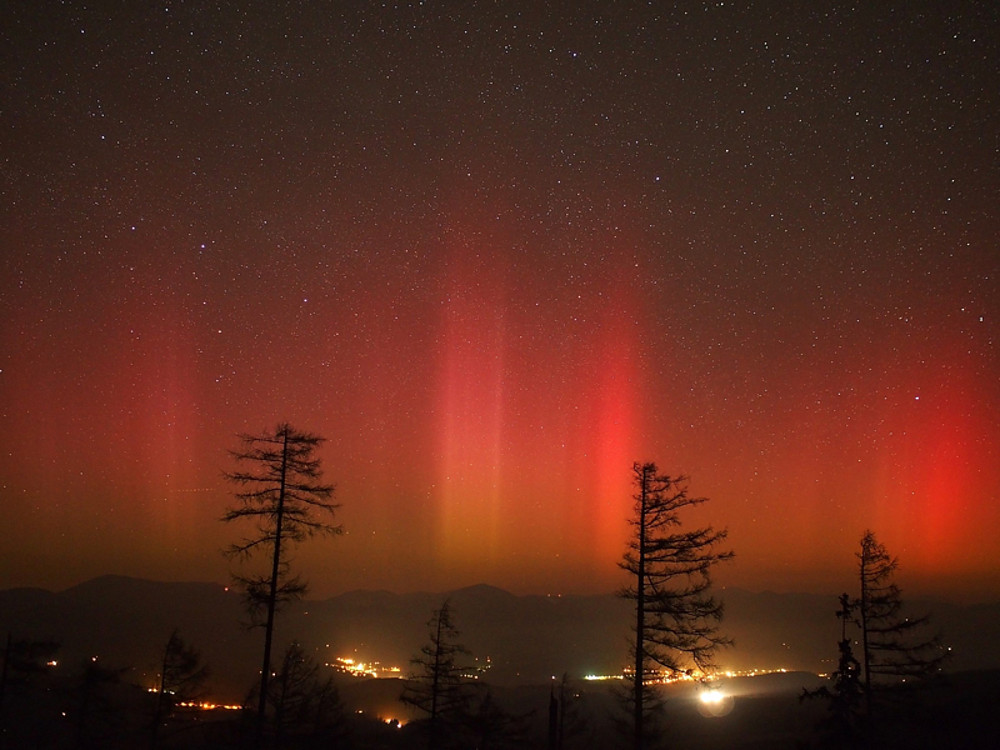
Naturspektakel im Gange: SonnenforscherInnen messen den stärksten Sturm im Magnetfeld seit 2005. Foto: Herfried Eisler/spaceweathergallery.com

Heftigste Störung im Erdmagnetfeld seit fast zehn Jahren im Gange

Pünktlich zum St. Patricks Day färbten in der Nacht von Dienstag, 17., auf Mittwoch, 18. März 2015,  Nordlichter den Himmel grün in weiten Teilen Nordeuropas, den nördlichen US-Bundesstaaten und Kanada, sowie in Australien. Sogar in Österreich, wo dieses Schauspiel nur extrem selten zu beoachten ist, wurden Nordlichter gesichtet.

"Die maximale Intensität dieses Sturm im Erdmagnetfeld war doppelt so hoch wie die des bisher stärksten Sturms", erklärt Dr. Christian Möstl, "im jetztigen Sonnenzyklus ist dieser Sturm daher die Nummer eins." Möstl ist Projektleiter einiger vom österreichischen Wissenschaftsfonds FWF sowie von der EU geförderten Projekte zur Erforschung von Sonnenstürmen an der Universität Graz und am Institut für Weltraumforschung der ÖAW. Er sieht als Auslöser dieser Himmelserscheinungen zwei Sonnenstürme, die am 15. März 2015 auf der Sonne ausbrachen. Sie wurden zunächst als eher schwach eingestuft schienen nicht direkt auf die Erde gerichtet zu sein.

"Echtzeit-Daten von erdnahen Raumsonden zeigen jetzt jedoch, dass die Erde doch direkt getroffen worden ist, was die hohe Intensität des Sturms erklärt", schildert Möstl. Er hat als Co-Autor in einer Publikation in "Nature Communications" im Jahr 2014 außerdem gezeigt, dass scheinbar schwache Sonnenstürme sich durch Wechselwirkung sehr stark aufschaukeln können, was auch hier der Fall gewesen sein dürfte.Die Intensität des Sturms hat bereits abgenommen, sodass in der kommenden Nacht von Mittwoch bis Donnerstag wahrscheinlich keine Nordlichter in Österreich zu sehen sein werden.

created by Christian Möstl & Gerhild Kastrun

Related news

New FWF – WEAVE Project "Longer Acenes: Synthesis, Interfaces, and Thin Films"

Unlocking the Potential of Longer Acenes: A New Era in Organic Electronics

Two Awards for an Outstanding Dissertation

Andreas Windischbacher received two prestigious awards for his outstanding doctoral dissertation. On March 17th, 2025, he was presented with the golden ring of honour of the Republic of Austria by our Federal President as part of the Promotio sub auspiciis Praesidentis rei publicae. On the same day, he was also selected for the Josef Krainer Förderungspreis, whose ceremonial presentation, however, took place later on November 12th, 2025.

NanoGraz Careers & Ideas Days 2025: Career paths after the doctorate

On October 13 and 14, the consortium NanoGraz of the Research Career Campus at the University of Graz organized a two-day event to inform the consortium's doctoral students about their career options after completing their doctorate. In addition to exciting lectures by early-career researchers as well as representatives from industry, the Austrian Science Fund (FWF), and the research management of the University of Graz, a brainstorming competition took place on the second day, in which the participants had the opportunity to develop their own joint mini-projects.

Seed-Funding Grant: Bringing Ideas to Life Together

With the new OpNaQ Seed-Funding Grant, the OpNaQ Group, part of the Institute of Physics, lifts collaboration within the research group to a whole new level, and supports sub-groups in turning their ideas into concrete projects.

Begin of page section:
Additional information:

University of Graz
Universitaetsplatz 3
8010 Graz
Austria
  • Contact
  • Web Editors
  • Moodle
  • UNIGRAZonline
  • Imprint
  • Data Protection Declaration
  • Accessibility Declaration
Weatherstation
Uni Graz

End of this page section. Go to overview of page sections

End of this page section. Go to overview of page sections

Begin of page section:

End of this page section. Go to overview of page sections