Begin of page section:
Page sections:

  • Go to contents (Accesskey 1)
  • Go to position marker (Accesskey 2)
  • Go to main navigation (Accesskey 3)
  • Go to sub navigation (Accesskey 4)
  • Go to additional information (Accesskey 5)
  • Go to page settings (user/language) (Accesskey 8)
  • Go to search (Accesskey 9)

End of this page section. Go to overview of page sections

Begin of page section:
Page settings:

English en
Deutsch de
Search
Login

End of this page section. Go to overview of page sections

Begin of page section:
Search:

Search for details about Uni Graz
Close

End of this page section. Go to overview of page sections


Search

Begin of page section:
Main navigation:

Page navigation:

  • University

    University
    • About the University
    • Organisation
    • Faculties
    • Library
    • Working at University of Graz
    • Campus
    Developing solutions for the world of tomorrow - that is our mission. Our students and our researchers take on the great challenges of society and carry the knowledge out.
  • Research Profile

    Research Profile
    • Our Expertise
    • Research Questions
    • Research Portal
    • Promoting Research
    • Research Transfer
    • Ethics in Research
    Scientific excellence and the courage to break new ground. Research at the University of Graz creates the foundations for making the future worth living.
  • Studies

    Studies
    • Prospective Students
    • Students
  • Community

    Community
    • International
    • Location
    • Research and Business
    • Alumni
    The University of Graz is a hub for international research and brings together scientists and business experts. Moreover, it fosters the exchange and cooperation in study and teaching.
  • Spotlight
Topics
  • Our digital Advent calendar
  • Sustainable University
  • Researchers answer
  • Work for us
Close menu

End of this page section. Go to overview of page sections

Begin of page section:
You are here:

University of Graz Natural sciences Institute of Physics News Theoretisch ein Sternenforscher
  • About the institute
  • Our research
  • Personalities
  • Student Services
  • News
  • Events

End of this page section. Go to overview of page sections

Tuesday, 20 January 2015

Theoretisch ein Sternenforscher
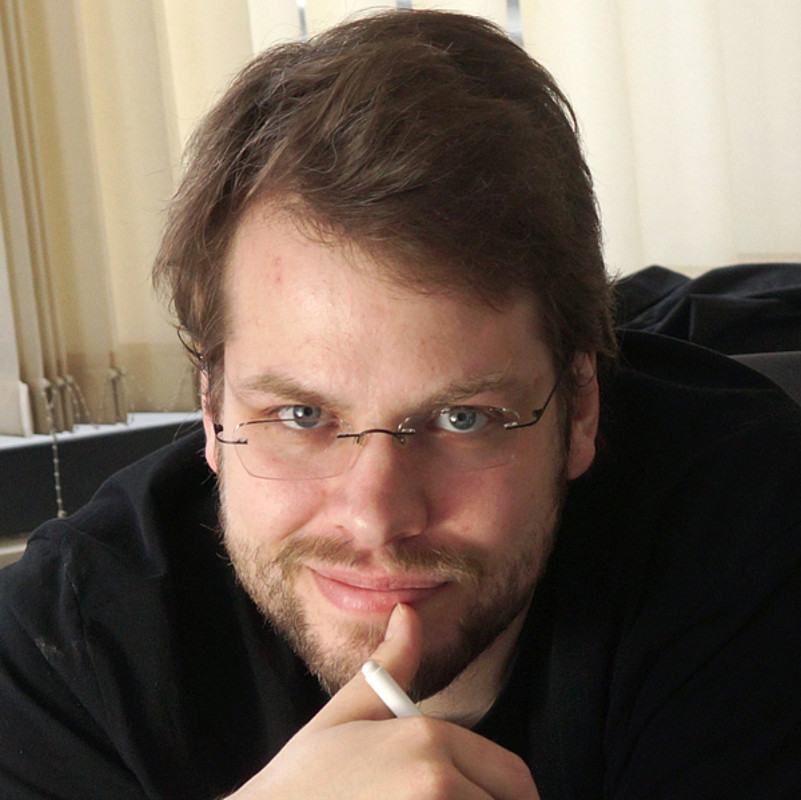
Axel Maas ist Professor für Theoretische Teilchenphysik seit 1. Oktober 2014. Seine Forschungen zu Higgs und Neutronensternen sind auch über Twitter und im Blog nachzulesen. Foto: Maas

Axel Maas ist Professor für Theoretische Teilchenphysik seit 1. Oktober 2014. Seine Forschungen zu Higgs und Neutronensternen sind auch über Twitter und im Blog nachzulesen. Foto: Maas

Axel Maas ist seit Oktober 2014 Professor für Theoretische Teilchenphysik

Was sind Neutronensterne und wie funktionieren sie? Eine Frage, die von der Wissenschaft noch nicht zur Gänze geklärt wurde, jedoch zum Forschungsalltag von Univ.-Prof. Dr. Axel Torsten Maas gehört. Der gebürtige Deutsche verfolgt bereits seit seiner Diplomarbeit an der Uni Darmstadt diese Himmelskörper. „Wir beobachten zwar, dass es sie gibt, aber allzu viel wissen wir über die Neutronensterne noch nicht.“ Theoretische Teilchenphysik ist sein Steckenpferd; in seiner Laufbahn führte es den 38-Jährigen zuerst an viele Orte, bevor er im Oktober 2014 als Universitätsprofessor an das Institut für Physik der Uni Graz berufen wurde. Im Rahmen seiner Forschungen kooperiert der Wissenschafter auch mit dem Teilchenbeschleuniger LHC am CERN in der Schweiz.

Maas forschte nach seiner Dissertation an der deutschen Gesellschaft für Schwerionenforschung, bevor es ihn als Postdoc nach Brasilien an die Universität São Paulo verschlug. Danach arbeitet er an der Slowakischen Akademie der Wissenschaften in Bratislava. Als Postdoc kam er dann an die Universität Graz kam: „Zwei Jahre davon bekam ich ein Lise-Meitner-Stipendium.“ 2011 habilitierte er sich hier auch. Von 2011 bis 2014 hatte er eine von der Deutschen Forschungsgesellschaft (DFG) finanzierte Stelle an der Universität Jena, es folgte Ende 2013 ein Heisenberg-Stipendium.

Dass gerade Graz als Forschungs- und Lehrort für ihn in Frage kam, hat einen einfachen Grund: „Am Physik-Institut ist eine der größten Arbeitsgruppen zu , Nichtlinear wechselwirkende Elementarteilchen‘ Europas beheimatet“, betont Maas und meint damit die Gruppe um die Professoren Reinhard Alkofer und Christof Gattringer. Und diese Gruppe beschäftigt sich auch mit dem Standardmodell der Teilchenphysik, dessen letzter Baustein das „Higgs“-Teilchen ist. Der Physiker setzt sich mit den Eigenschaften dieser Entdeckung auseinander. In seiner Antrittsvorlesung am 27. Jänner stellt Maas „das Higgs als Prüfstein der theoretischen Teilchenphysik“ in den Raum. Beginn ist um 17 Uhr im Hörsaal 05.01.

Axel Maas auf Twitter @axelmaas und im Blog http://axelmaas.blogspot.co.at/

created by Konstantinos Tzivanopoulos

Related news

New FWF – WEAVE Project "Longer Acenes: Synthesis, Interfaces, and Thin Films"

Unlocking the Potential of Longer Acenes: A New Era in Organic Electronics

Two Awards for an Outstanding Dissertation

Andreas Windischbacher received two prestigious awards for his outstanding doctoral dissertation. On March 17th, 2025, he was presented with the golden ring of honour of the Republic of Austria by our Federal President as part of the Promotio sub auspiciis Praesidentis rei publicae. On the same day, he was also selected for the Josef Krainer Förderungspreis, whose ceremonial presentation, however, took place later on November 12th, 2025.

NanoGraz Careers & Ideas Days 2025: Career paths after the doctorate

On October 13 and 14, the consortium NanoGraz of the Research Career Campus at the University of Graz organized a two-day event to inform the consortium's doctoral students about their career options after completing their doctorate. In addition to exciting lectures by early-career researchers as well as representatives from industry, the Austrian Science Fund (FWF), and the research management of the University of Graz, a brainstorming competition took place on the second day, in which the participants had the opportunity to develop their own joint mini-projects.

Seed-Funding Grant: Bringing Ideas to Life Together

With the new OpNaQ Seed-Funding Grant, the OpNaQ Group, part of the Institute of Physics, lifts collaboration within the research group to a whole new level, and supports sub-groups in turning their ideas into concrete projects.

Begin of page section:
Additional information:

University of Graz
Universitaetsplatz 3
8010 Graz
Austria
  • Contact
  • Web Editors
  • Moodle
  • UNIGRAZonline
  • Imprint
  • Data Protection Declaration
  • Accessibility Declaration
Weatherstation
Uni Graz

End of this page section. Go to overview of page sections

End of this page section. Go to overview of page sections

Begin of page section:

End of this page section. Go to overview of page sections