Three questions for Axel Maas
Who are the leaders who reflect on systemic injustices and how they may affect younger researchers? We're back with our collegiality showcase, to highlight Axel Maas, professor at the Institute for Physics.
Among other things, Axel Maas is speaker of the RCC Consortium "Theoretical Particle Physics", which recently won a FWF doc.funds grant (for the project "Conceptual Aspects of Composite States”) dedicated to structured PhD training. Here are his three answers to our three questions.
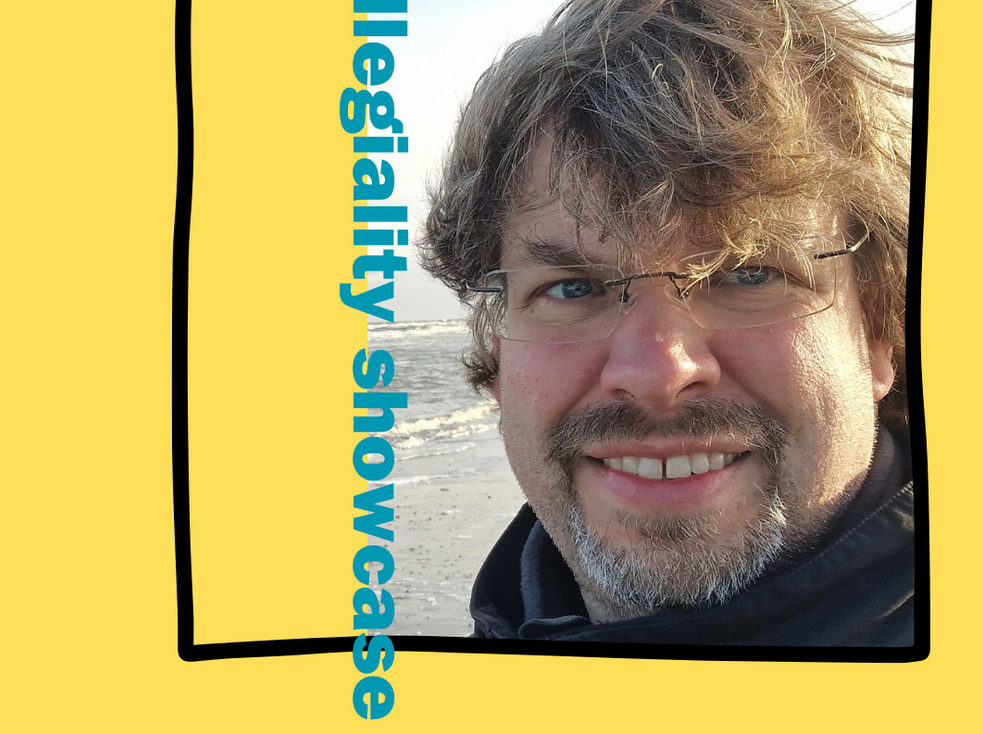
1) Which activities for contributing to a positive research environment are most important in your view, and what is your personal contribution to this cause?
Taking care. In particular, being available and willing to listen without judgement. Making the costs of errors low to encourage initiative. Being an example for a healthy work-life-balance, and knowing the state of the art on research about it, to give the opportunity to be optimally productive. In particular, do not expect anyone to put their research above their own well-being.
E.g., I have always an open chat with everyone in my group, in which I usually react quickly. But only at the times where I am anyhow in my research environment, and I make clear everyone is aware of that. But no questions will ever go unanswered, and I strive that I give the understanding that every question is ok. And to always making time for a meeting with people from my group.
2) What do you personally get out of your engagement as a mentor and supervisor?
Experience and understanding. Learning about how the people I work with see the research we are doing. What is important to them, what is obvious, what is difficult. What are the attitudes towards the questions there are. Ideas and insights from them are particularly great, and often lead far.
3) What helped you the most in your own leadership development, and what would you suggest to others who are starting out on their leadership path?
Read up on what we know about mental health, systemic injustices and how they may affect the various people you will lead, and what makes you really productive. Learn to not be someone who puts the research above the people. If you are willing to sacrifice part of your well-being for the research do never, ever expect if from anyone you lead, and learn not to consider this as a flaw.
Note that you are usually older, and have another lived experience than those you lead. Especially, in a time of escalating polycrisis, every generation is going through much more much more earlier than yourself.
Be forgiving and take care of them.
Thanks a lot, Axel Maas, for taking the time to answer our questions!
The Research Careers Campus Graz showcases people and networks which shape our research environment here in Graz - towards a more collegial, friendly and diverse academia, where all research talents can thrive. More here.
Interview: Johanna Stadlbauer, RCC, 15.1.2026
Podcast: Quanten & Philosophie
Welche Bedeutung hat Quantenphysik, und was hat es mit Messungen auf sich?
In dem populärwissenschaftlichen Popdcast "Bridging the Gap", welcher an der TU Graz produziert wird, sprechen dieses Mal Dr. Berghofer (Institut für Philosophie) und Prof. Maas (Institute für Physik) in zwei Episoden über die Schnittstelle von Quantenphysik und Philosophie, und was man daraus über die Welt, in der wir leben, lernen können. Und was real ist.

Spotify:
Applemusic:
Amazonmusic:
Youtube:
Graz Center of Physics
Was denken Mitarbeiter:innen am Institut für Physik über das Projekt
Martin Sterrer
"Im Graz Center of Physics werden wir im Bereich der Experimentalphysik noch intensiver und strukturierter als bisher mit den Kollegen und Kolleginnen der TU Graz in der Forschung zusammenarbeiten können. Das betrifft zum Beispiel die gemeinsame Nutzung von kostenintensiver Infrastruktur. Ganz wesentlich ist aber auch der persönliche Kontakt. Ich erwarte mir durch die räumliche Nähe mit den KollegInnen einen wesentlich engeren wissenschaftlichen Austausch und dadurch die Möglichkeit, neue Forschungsfelder in Kooperation zu erschließen. Unser Ziel wird es sein, den Physik-Standort Graz weltweit noch sichtbarer zu machen und durch exzellente Lehre und Forschung internationale Studierende und Forschende zu uns zu holen."


Karin Sorko
"Das GCP wird mit der Zusammenlegung der Physikbereiche der TU Graz und Uni Graz die Synergien in Forschung, Lehre und auch Verwaltung stärken. Die Studierenden profitieren von den kurzen Wegen am gemeinsamen Standort sowie von neuen Lehrräumen und neuer Infrastruktur. Das größte Potenzial liegt wohl in der Betreuung der Studierenden und dem Umgang mit der gemeinsamen Lehre. Eine zentrale Anlaufstelle für Studierendenanfragen ist geplant. Ebenso werden andere administrative Bereiche enger miteinander arbeiten und neue Wege in der Verwaltung gehen. Ich bin auch neugierig, welche nachhaltigen Konzepte in dem Gebäude Einzug finden."
Mit gebündeltem Fachwissen die Wissenschaft voranbringen. Lehre, Forschung und Technologie für morgen.
Beim Graz Center of Physics handelt es sich um eines der größten Universitätsbauprojekte Österreichs. Es wird die Physik-Institute von Universität Graz und TU Graz an einem gemeinsamen Standort vereinen.