Begin of page section:
Page sections:

  • Go to contents (Accesskey 1)
  • Go to position marker (Accesskey 2)
  • Go to main navigation (Accesskey 3)
  • Go to sub navigation (Accesskey 4)
  • Go to additional information (Accesskey 5)
  • Go to page settings (user/language) (Accesskey 8)
  • Go to search (Accesskey 9)

End of this page section. Go to overview of page sections

Begin of page section:
Page settings:

English en
Deutsch de
Search
Login

End of this page section. Go to overview of page sections

Begin of page section:
Search:

Search for details about Uni Graz
Close

End of this page section. Go to overview of page sections


Search

Begin of page section:
Main navigation:

Page navigation:

  • University

    University
    • About the University
    • Organisation
    • Faculties
    • Library
    • Working at University of Graz
    • Campus
    Developing solutions for the world of tomorrow - that is our mission. Our students and our researchers take on the great challenges of society and carry the knowledge out.
  • Research Profile

    Research Profile
    • Our Expertise
    • Research Questions
    • Research Portal
    • Promoting Research
    • Research Transfer
    • Ethics in Research
    Scientific excellence and the courage to break new ground. Research at the University of Graz creates the foundations for making the future worth living.
  • Studies

    Studies
    • Prospective Students
    • Students
  • Community

    Community
    • International
    • Location
    • Research and Business
    • Alumni
    The University of Graz is a hub for international research and brings together scientists and business experts. Moreover, it fosters the exchange and cooperation in study and teaching.
  • Spotlight
Topics
  • Our digital Advent calendar
  • Sustainable University
  • Researchers answer
  • Work for us
Close menu

End of this page section. Go to overview of page sections

Begin of page section:
You are here:

University of Graz Natural sciences Institute of Physics News Heiße Materie
  • About the institute
  • Our research
  • Personalities
  • Student Services
  • News
  • Events

End of this page section. Go to overview of page sections

Tuesday, 12 April 2016

Heiße Materie

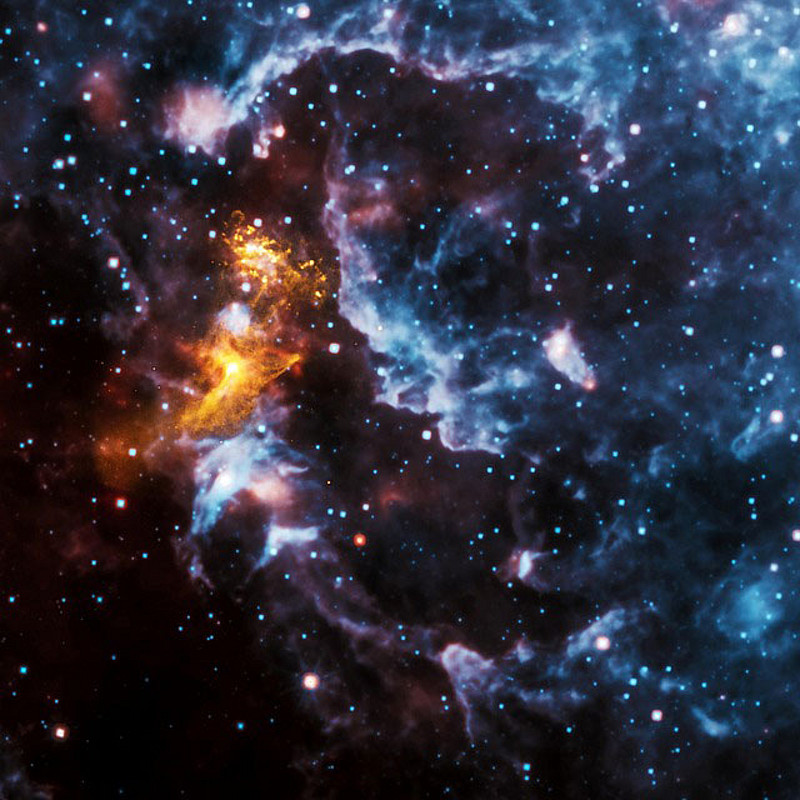
Grazer PhysikerInnen befassen sich mit der theoretischen Beschreibung und Simulation der Eigenschaften von Materie bei extrem hohen Temperaturen und/oder Dichten, wie etwa beim Zusammenstoß von Neutronensternen. Foto: pixabay

Grazer PhysikerInnen befassen sich mit der theoretischen Beschreibung und Simulation der Eigenschaften von Materie bei extrem hohen Temperaturen und/oder Dichten, wie etwa beim Zusammenstoß von Neutronensternen. Foto: pixabay

Arbeitsgruppe für Theoretische Teilchenphysik der Uni Graz ist Partner im EU-Netzwerk COST – Cooperation in Science and Technology

Die Arbeitsgruppe Theoretische Elementarteilchenphysik von Univ.-Prof. Dr. Reinhard Alkofer, Univ.-Prof. Dr. Christof Gattringer und Univ.-Prof. Dr. Axel Maas ist seit kurzem Partner in einem neuen europäischen Forschungsnetzwerk, finanziert über das Programm COST (Cooperation in Science and Technology der Europäischen Kommission. Ziel des Großforschungsprojekts „Theory of hot matter and relativistic heavy-ion collisions“ ist es, alle bedeutenden WissenschafterInnen in Europa zu vernetzen, die sich mit der theoretischen Beschreibung und Simulation der Eigenschaften von Materie bei extrem hohen Temperaturen und/oder Dichten befassen. Solche Bedingungen herrschten im frühen Universum, zwei bis drei Sekunden nach dem Urknall, finden sich aber auch im Inneren von kollabierenden Sternen.

Auch wenn sich diese Vorgänge in weiter Ferne abspielen, so haben sie doch auch große Relevanz für unsere Existenz. „Denn Sternenleichen sind die Quelle von schweren Elementen wie Blei, Titan, Gold oder den begehrten Seltenen Erden, die in der modernen Informations- und Kommunikationstechnologie eine so bedeutende Rolle spielen“, erklärt Reinhard Alkofer. „Sie entstehen durch den Zusammenstoß von Neutronensternen.“
Die theoretischen Forschungen im neuen COST-Netzwerk, das 40 Arbeitsgruppen aus ganz Europa zusammenbringt und erst einmal auf vier Jahre bewilligt wurde, ergänzen Experimente, wie sie beispielsweise am CERN in der Schweiz durchgeführt werden.
Aus Österreich sind neben den Grazer PhysikerInnen noch WissenschafterInnen der TU Wien beteiligt. Axel Maas und Univ.-Prof. Dr. Anton Rebhan von der TU Wien wurden als Österreich-Vertreter ins Management Committee, das für die Koordination der Aktivitäten zuständig ist, entsandt.

Neben reinem Erkenntnisgewinn hat die Grundlagenforschung auch weiterreichenden Nutzen. Zum einen bildet die Quantenphysik die Basis für Mikroelektronik und Nanotechnologie. Zum anderen bereitet auch die Entwicklung neuer mathematischer Werkzeuge, Algorithmen und Simulationsmethoden den Weg für technologische Innovationen, wie etwa im Bereich von Computer-Chips.
„Hinzu kommt, dass ForscherInnen der Theoretischen Physik zugleich SpezialistInnen für komplexe Systemzusammenhänge sind“, unterstreicht Axel Maas. „Darüber hinaus haben wir gelernt, mit ganz neuen Fragestellungen und Problemen umzugehen und nach konzeptionell neuen Lösungen zu suchen.“ Deshalb sind ihre Kompetenzen in vielen Bereichen stark gefragt – von der technischen Industrie bis hin zur Finanzwirtschaft.

created by Gudrun Pichler

Related news

New FWF – WEAVE Project "Longer Acenes: Synthesis, Interfaces, and Thin Films"

Unlocking the Potential of Longer Acenes: A New Era in Organic Electronics

Two Awards for an Outstanding Dissertation

Andreas Windischbacher received two prestigious awards for his outstanding doctoral dissertation. On March 17th, 2025, he was presented with the golden ring of honour of the Republic of Austria by our Federal President as part of the Promotio sub auspiciis Praesidentis rei publicae. On the same day, he was also selected for the Josef Krainer Förderungspreis, whose ceremonial presentation, however, took place later on November 12th, 2025.

NanoGraz Careers & Ideas Days 2025: Career paths after the doctorate

On October 13 and 14, the consortium NanoGraz of the Research Career Campus at the University of Graz organized a two-day event to inform the consortium's doctoral students about their career options after completing their doctorate. In addition to exciting lectures by early-career researchers as well as representatives from industry, the Austrian Science Fund (FWF), and the research management of the University of Graz, a brainstorming competition took place on the second day, in which the participants had the opportunity to develop their own joint mini-projects.

Seed-Funding Grant: Bringing Ideas to Life Together

With the new OpNaQ Seed-Funding Grant, the OpNaQ Group, part of the Institute of Physics, lifts collaboration within the research group to a whole new level, and supports sub-groups in turning their ideas into concrete projects.

Begin of page section:
Additional information:

University of Graz
Universitaetsplatz 3
8010 Graz
Austria
  • Contact
  • Web Editors
  • Moodle
  • UNIGRAZonline
  • Imprint
  • Data Protection Declaration
  • Accessibility Declaration
Weatherstation
Uni Graz

End of this page section. Go to overview of page sections

End of this page section. Go to overview of page sections

Begin of page section:

End of this page section. Go to overview of page sections