Begin of page section:
Page sections:

  • Go to contents (Accesskey 1)
  • Go to position marker (Accesskey 2)
  • Go to main navigation (Accesskey 3)
  • Go to sub navigation (Accesskey 4)
  • Go to additional information (Accesskey 5)
  • Go to page settings (user/language) (Accesskey 8)
  • Go to search (Accesskey 9)

End of this page section. Go to overview of page sections

Begin of page section:
Page settings:

English en
Deutsch de
Search
Login

End of this page section. Go to overview of page sections

Begin of page section:
Search:

Search for details about Uni Graz
Close

End of this page section. Go to overview of page sections


Search

Begin of page section:
Main navigation:

Page navigation:

  • University

    University
    • About the University
    • Organisation
    • Faculties
    • Library
    • Working at University of Graz
    • Campus
    Developing solutions for the world of tomorrow - that is our mission. Our students and our researchers take on the great challenges of society and carry the knowledge out.
  • Research Profile

    Research Profile
    • Our Expertise
    • Research Questions
    • Research Portal
    • Promoting Research
    • Research Transfer
    • Ethics in Research
    Scientific excellence and the courage to break new ground. Research at the University of Graz creates the foundations for making the future worth living.
  • Studies

    Studies
    • Prospective Students
    • Students
    • Welcome Weeks for First Year Students
  • Community

    Community
    • International
    • Location
    • Research and Business
    • Alumni
    The University of Graz is a hub for international research and brings together scientists and business experts. Moreover, it fosters the exchange and cooperation in study and teaching.
  • Spotlight
Topics
  • Sustainable University
  • Researchers answer
  • Work for us
Close menu

End of this page section. Go to overview of page sections

Begin of page section:
You are here:

University of Graz Natural sciences Institute of Physics News Panel discussion with AI experts from the University of Graz
  • About the institute
  • Our research
  • Personalities
  • Student Services
  • News
  • Events

End of this page section. Go to overview of page sections

Tuesday, 18 February 2025

Panel discussion with AI experts from the University of Graz

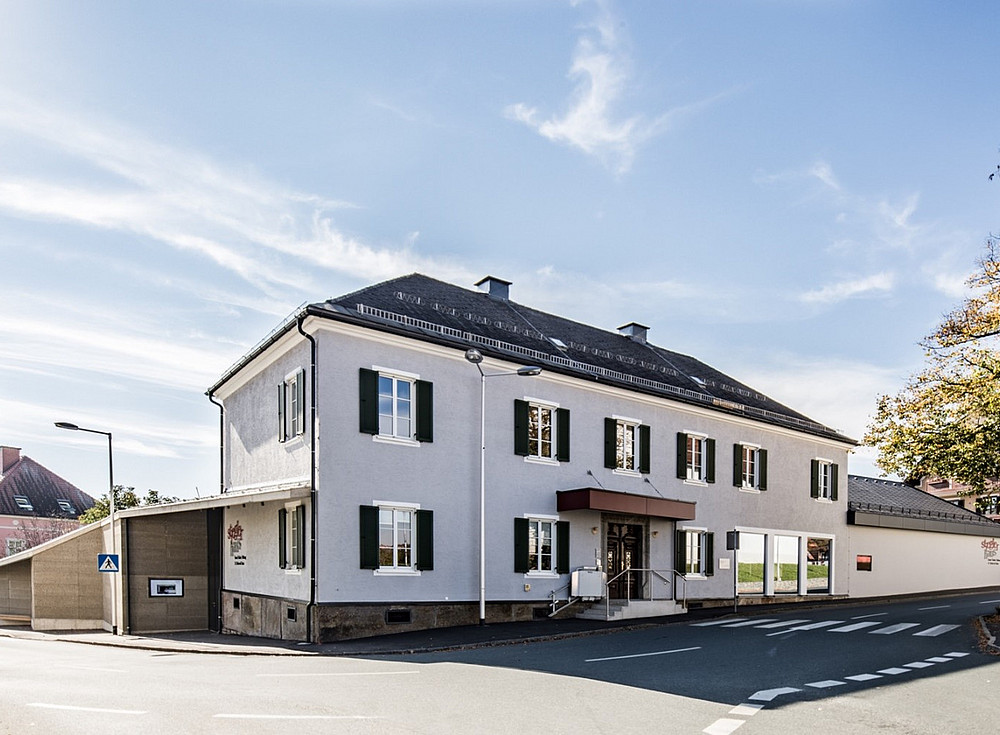
The "Stieglerhaus", a centre for culture, art and education (Managing director: Nina Ortner) ©blendpunkt

The "Stieglerhaus", a centre for culture, art and education (Managing director: Nina Ortner) - Photo: blendpunkt

The panel discussion with AI experts from the fields of physics, philosophy, art, and human resource management is the final event of the AI project DELPHI, led by Isabell Piantschitsch. By choosing the Stieglerhaus in St. Stefan ob Stainz as the venue for the discussion, the aim is to provide an especially accessible and low-threshold opportunity for people living in more rural areas who are interested in scientific and societal issues related to AI.

In addition to DELPHI project leader Isabell Piantschitsch (Institute of Physics), the discussion will also feature Philipp Berghofer (Institute of Philosophy), Susanne Kogler (Institute of Art and Musicology), and Monika Fuchs, an AI expert in human resource management. This interdisciplinary panel, moderated by chemistry educator and science communicator Philipp Spitzer (Institute of Chemistry), will address questions such as: Where is AI used in natural science research, and can I trust the results generated by AI? Can AI create original, new works of art, and how do I even define a work of art? How is AI used in recruitment, and is it a good idea to write my application with the help of AI?

The panel discussion will take place on March 15, 2025, at the Stieglerhaus in St. Stefan ob Stainz in the district of Deutschlandsberg. The fact that the discussion will not be held at the University of Graz but at the Stieglerhaus, which is led by musicologist and cultural manager Nina Ortner, has a special reason. "Sometimes, the university as a venue can present a slight barrier. With this event, we want to bring the AI experts from the University of Graz to the Styrian districts and thus help overcome this barrier a little," emphasizes DELPHI project leader Isabell Piantschitsch.

Science communicator Philipp Spitzer agrees with this as well. He has already organized several experimental evenings for the general public at the Stieglerhaus. "Science and its phenomena are fascinating and affect our daily lives. Unfortunately, we talk about them far too little. This is where I want to start—highlighting scientific phenomena in everyday life, explaining them, and discussing them together. Making science and research more tangible again."

Website of the panel discussion:
https://stieglerhaus.at/veranstaltung/kuenstliche-intelligenz-als-forschungsmethode/

Website of „We Talk About Science”, a common project between Philipp Spitzer and the Stieglerhaus:
https://stieglerhaus.at/spotting-science/
 

Isabell Piantschitsch (Institute of Physics), Philipp Berghofer (Institute of Philosophy) ©Uni Graz/Tzivanopoulos und J. Schauer
©Uni Graz/Tzivanopoulos und J. Schauer
The KI experts in the panel discussion: Isabell Piantschitsch (Institute of Physics) and Philipp Berghofer (Institute of Philosophy) ... - Photo: Isabell Piantschitsch: © Uni Graz, Tzivanopolous
Monika Fuchs (Merkur Versicherung AG), Susanne Kogler (Department of Arts and Musicology) ©Uni Graz/Tzivanopoulos und J. Schauer
©Uni Graz/Tzivanopoulos und J. Schauer
Susanne Kogler (Department of Arts and Musicology) and Monika Fuchs (Merkur Versicherung AG) - Photo: Susanne Kogler: © J. Schauer
Philipp Spitzer, chemistry educator, science communicator and moderator of the AI panel discussion ©Uni Graz/wildundwunderbar
©Uni Graz/wildundwunderbar
Philipp Spitzer, chemistry educator, science communicator and moderator of the AI panel discussion - Photo: © Uni Graz/wildundwunderbar

Related news

How Fast Is Ultrafast?

In a recent episode of the podcast Bridge the Gap, Tommaso Mazzocchi and Daniel Werner, two graduate physics students, interviewed Peter Puschnig about ultrafast spectroscopy and his current research. The conversation spans fundamental quantum-mechanical concepts and leads up to state-of-the-art methods for observing electronic dynamics in real time. The episode is titled “How fast is ultrafast spectroscopy?” and is aimed at students and anyone interested in modern physics research.

Accelerated communication with the Kanzelhöhe: solar observatory moves closer to the university

From mid-December, the train journey from Graz to Villach will be reduced to just over an hour. This faster railway connection through the Koralm Tunnel will also bring the Kanzelhöhe Observatory for Solar and Environmental Research closer. Although this unique research station at 1500 metres above sea level is located on the Carinthian Gerlitzen, it has been part of the University of Graz for more than 75 years.

New FWF – WEAVE Project "Longer Acenes: Synthesis, Interfaces, and Thin Films"

Unlocking the Potential of Longer Acenes: A New Era in Organic Electronics

Two Awards for an Outstanding Dissertation

Andreas Windischbacher received two prestigious awards for his outstanding doctoral dissertation. On March 17th, 2025, he was presented with the golden ring of honour of the Republic of Austria by our Federal President as part of the Promotio sub auspiciis Praesidentis rei publicae. On the same day, he was also selected for the Josef Krainer Förderungspreis, whose ceremonial presentation, however, took place later on November 12th, 2025.

Begin of page section:
Additional information:

University of Graz
Universitaetsplatz 3
8010 Graz
Austria
  • Contact
  • Web Editors
  • Moodle
  • UNIGRAZonline
  • Imprint
  • Data Protection Declaration
  • Accessibility Declaration
Weatherstation
Uni Graz

End of this page section. Go to overview of page sections

End of this page section. Go to overview of page sections

Begin of page section:

End of this page section. Go to overview of page sections