What holds our universe together?
Axel Maas, Department of Theoretical Physics
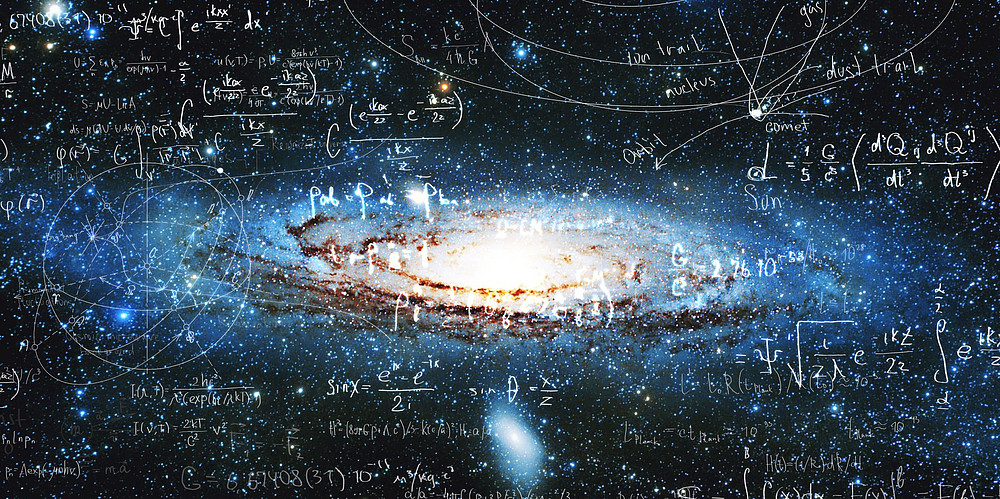
The origin and structure of the universe are still not fully understood. Axel Maas and his colleagues are searching for the fundamental building blocks of the cosmos and the elementary interactions that make up all matter. The findings from this research provide insights not only into the origin of the universe, but also into its fate. The particle physicists at the University of Graz are using their theories to develop the basis for technological experiments. They are important partners for research centers such as CERN.

Is the sun going to explode?
Astrid Veronig, Department of Astrophysics
It enables life on Earth, yet at the same time threatens it: the sun—the fixed star of both our planetary system and Astrid Veronig's research. The astrophysicist is primarily concerned with the corona, the sun's outer atmosphere. This layer of the atmosphere is millions of degrees hot. Eruptions triggered there have a massive impact on the weather in space, and the head of the Kanzelhöhe Observatory for Solar and Environmental Research at the University of Graz wants to be able to predict their effects more accurately.
Why is there a harsh wind blowing in space?
Manuela Temmer, Department of Astrophysics
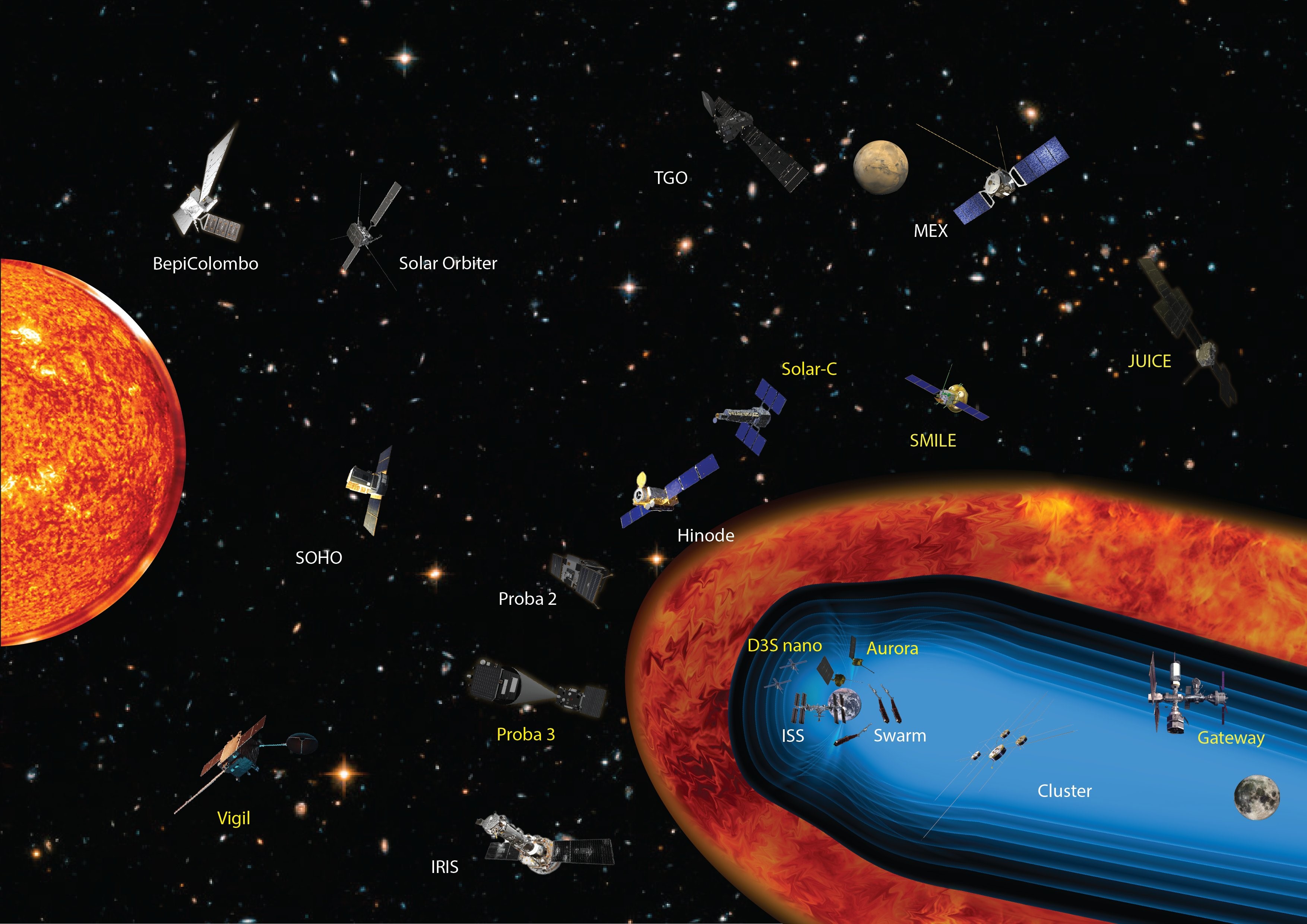
The astrophysicist observes processes originating from the sun that influence conditions in space. This is because powerful streams of plasma and magnetic fields race through our planetary system. These are mixed with magnetic clouds that can cause massive disruption to communication systems on Earth. Heliophysics also encompasses space weather research, which aims to improve our understanding of the solar-terrestrial system and investigates how solar activity influences Earth's magnetosphere, ionosphere, and thermosphere—a highly interdisciplinary field of research.

What does light sound like?
Robert Nuster, Department of Experimental Physics
In order to detect diseases at an early stage or assess the condition of donor organs without surgical intervention, precise images from inside the body are required. A new method is expected to deliver razor-sharp 3D images in the future – with the help of light. This is sent into the tissue, partially absorbed, and converted into ultrasound waves. Sensors measure the propagation of these waves. The acoustic signals are used to create a 1:1 image of our inner workings. Physicist Robert Nuster has further developed the method of “photoacoustic imaging” and has already used it to produce 3D images of blood vessels.