Begin of page section:
Page sections:

  • Go to contents (Accesskey 1)
  • Go to position marker (Accesskey 2)
  • Go to main navigation (Accesskey 3)
  • Go to sub navigation (Accesskey 4)
  • Go to additional information (Accesskey 5)
  • Go to page settings (user/language) (Accesskey 8)
  • Go to search (Accesskey 9)

End of this page section. Go to overview of page sections

Begin of page section:
Page settings:

English en
Deutsch de
Search
Login

End of this page section. Go to overview of page sections

Begin of page section:
Search:

Search for details about Uni Graz
Close

End of this page section. Go to overview of page sections


Search

Begin of page section:
Main navigation:

Page navigation:

  • University

    University
    • About the University
    • Organisation
    • Faculties
    • Library
    • Working at University of Graz
    • Campus
    Developing solutions for the world of tomorrow - that is our mission. Our students and our researchers take on the great challenges of society and carry the knowledge out.
  • Research Profile

    Research Profile
    • Our Expertise
    • Research Questions
    • Research Portal
    • Promoting Research
    • Research Transfer
    • Ethics in Research
    Scientific excellence and the courage to break new ground. Research at the University of Graz creates the foundations for making the future worth living.
  • Studies

    Studies
    • Prospective Students
    • Students
    • Welcome Weeks for First Year Students
  • Community

    Community
    • International
    • Location
    • Research and Business
    • Alumni
    The University of Graz is a hub for international research and brings together scientists and business experts. Moreover, it fosters the exchange and cooperation in study and teaching.
  • Spotlight
Topics
  • Sustainable University
  • Researchers answer
  • Work for us
Close menu

End of this page section. Go to overview of page sections

Begin of page section:
You are here:

University of Graz Natural sciences Institute of Physics News Research on the International Stage
  • About the institute
  • Our research
  • Personalities
  • Student Services
  • News
  • Events

End of this page section. Go to overview of page sections

Friday, 06 February 2026

Research on the International Stage

Marko Simic ©wildundwunderbar

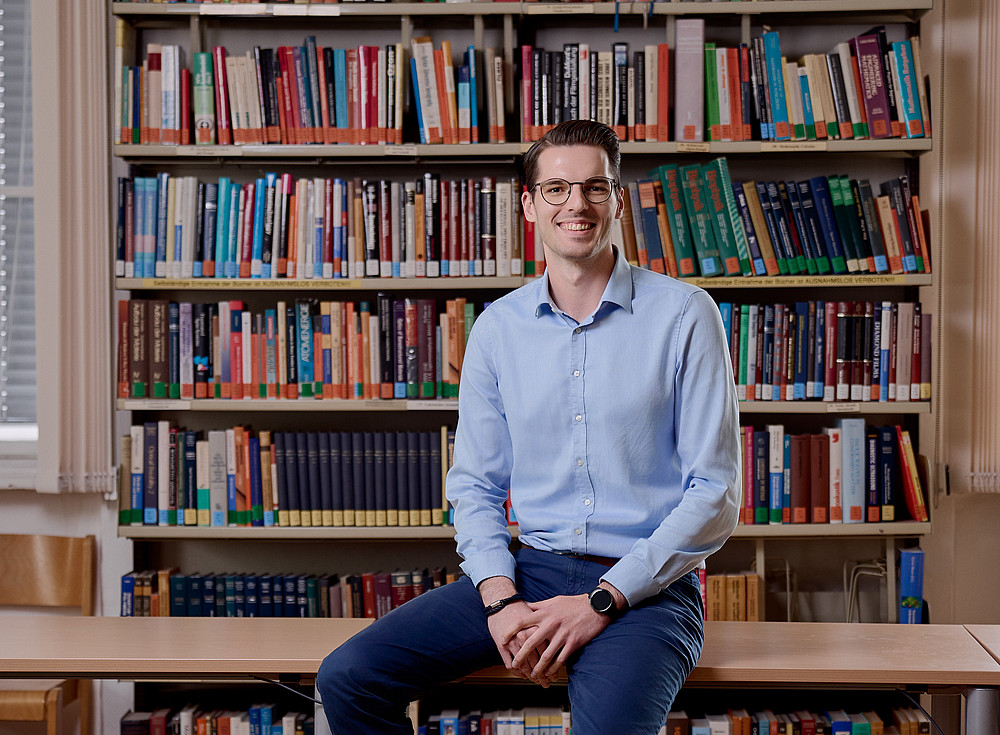
he Visiting Award enabled Marko Šimić to undertake a two-month research stay at the Stanford University in California (USA). - Photo: "wildundwunderbar"

Visiting Award 2025 Takes Marko Šimić to Stanford University


The Dean’s Office of the Faculty of Natural Sciences at the University of Graz has awarded Marko Šimić the Visiting Award 2025. This mobility fellowship is granted annually to outstanding early-career researchers. Its aim is to promote research at the highest level at internationally renowned research institutions, providing financial and organizational support from the University of Graz and its research management services.


As a postdoctoral researcher in the “Optics of Nano and Quantum Materials” (OpNaQ) group and a member of the Christian Doppler Laboratory “Structured Matter Based Sensing” (CDL-SMBS), Šimić conducts research on the development of electromagnetic field-based sensors in the fields of integrated photonics and millimeter-wave technology, supported by inverse-design methodologies.

The Visiting Award enabled Marko Šimić to undertake a two-month research stay at the Stanford University in California (USA). There, he was appointed Visiting Postdoctoral Scholar in the research group of host Professor Olav Solgaard at the Ginzton Laboratory. Working together with international experts in the heart of Silicon Valley, Šimić successfully conducted research on the development of novel sensors and methodologies for the characterization of complex structured light fields and partially coherent light, based on programmable integrated photonic circuits (rPICs).

The research stay at Stanford University not only allowed Marko Šimić to significantly expand his research and methodological expertise in the field of rPICs, but also enabled him to establish valuable professional connections, generate new ideas, and lay the foundation for future collaborations.

In this context, an intensive exchange took place with Professor David Miller, a cooperation partner of the CDL-SMBS, who, together with Professor Solgaard, is regarded as one of the world’s leading experts in the field of integrated photonics. Particularly fruitful was also the exchange with Professor Jelena Vučković and members of her group on inverse-design methods, which provided valuable insights into their working approaches and available research infrastructure.

The experience gained during the stay is crucial for Šimić’s current research on the development of imaging techniques (microscopy) using PICs within the framework of the CDL-SMBS. The research results obtained at Stanford are currently being prepared for publication in several scientific papers, and follow-up experiments are already underway beyond the duration of the research stay.

Link: https://opnaq.uni-graz.at/de/

Contact: Marko Simic (marko.simic(at)uni-graz.at), Peter Banzer (peter.banzer(at)uni-graz.at)
Stanford University in Kalifornien (USA ©Uni Graz / Simic
©Uni Graz / Simic
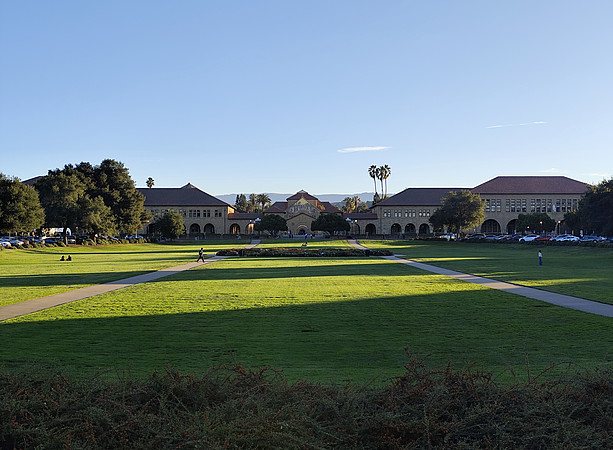
Stanford University (California, USA) - Photo: Uni Graz / Simic
Stanford University in Kalifornien (USA ©Uni Graz / Simic
©Uni Graz / Simic
Stanford University (California, USA) - Photo: Uni Graz / Simic
v.l.n.r. Prof. Olav Solgaard, Marko Šimić, und Prof. David A B Miller ©Uni Graz / Simic
©Uni Graz / Simic
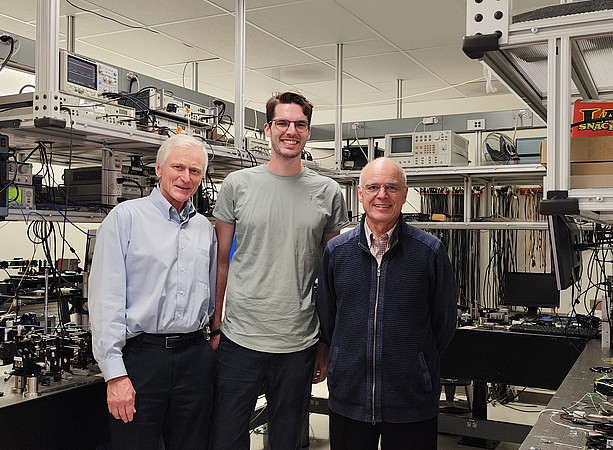
f.l.t.r. Prof. Olav Solgaard, Marko Šimić, and Prof. David A B Miller - Photo: Uni Graz / Simic

Related news

And the winner is ...

The winner of this year's indoor soccer tournament for employees of Styrian universities, universities of applied sciences and teacher education comes from our Institute! We congratulate our team with the prestigious name ‘We All have Potential!’ on this great success!

Happy birthday Schrödinger equation!

One of the most important equations of physics celebrates a round birthday.

Letzte freie Termine im Sommersemester: Schülerlabor „Candela“

Letzte freie Termine für Schüler:innenlabore, die für für die 3. bzw. 4. Klassen der SEK I konzipiert wurden, stehen für das Sommersemester 2026 noch zur Verfügung.

Making the cost of errors low to encourage initiative

Three questions for Axel Maas

Begin of page section:
Additional information:

University of Graz
Universitaetsplatz 3
8010 Graz
Austria
  • Contact
  • Web Editors
  • Moodle
  • UNIGRAZonline
  • Imprint
  • Data Protection Declaration
  • Accessibility Declaration
Weatherstation
Uni Graz

End of this page section. Go to overview of page sections

End of this page section. Go to overview of page sections

Begin of page section:

End of this page section. Go to overview of page sections