Begin of page section:
Page sections:

  • Go to contents (Accesskey 1)
  • Go to position marker (Accesskey 2)
  • Go to main navigation (Accesskey 3)
  • Go to sub navigation (Accesskey 4)
  • Go to additional information (Accesskey 5)
  • Go to page settings (user/language) (Accesskey 8)
  • Go to search (Accesskey 9)

End of this page section. Go to overview of page sections

Begin of page section:
Page settings:

English en
Deutsch de
Search
Login

End of this page section. Go to overview of page sections

Begin of page section:
Search:

Search for details about Uni Graz
Close

End of this page section. Go to overview of page sections


Search

Begin of page section:
Main navigation:

Page navigation:

  • University

    University
    • About the University
    • Organisation
    • Faculties
    • Library
    • Working at University of Graz
    • Campus
    Developing solutions for the world of tomorrow - that is our mission. Our students and our researchers take on the great challenges of society and carry the knowledge out.
  • Research Profile

    Research Profile
    • Our Expertise
    • Research Questions
    • Research Portal
    • Promoting Research
    • Research Transfer
    • Ethics in Research
    • Commission for Scientific Integrity
    Scientific excellence and the courage to break new ground. Research at the University of Graz creates the foundations for making the future worth living.
  • Studies

    Studies
    • Prospective Students
    • Students
  • Community

    Community
    • International
    • Location
    • Research and Business
    • Alumni
    The University of Graz is a hub for international research and brings together scientists and business experts. Moreover, it fosters the exchange and cooperation in study and teaching.
Topics
  • Sustainable University
  • Researchers answer
  • Work for us
Close menu

End of this page section. Go to overview of page sections

Begin of page section:
You are here:

University of Graz Natural sciences Institute of Physics News Herausragende Forscherin
  • About the institute
  • Our research
  • Personalities
  • Student Services
  • News
  • Events

End of this page section. Go to overview of page sections

Wednesday, 26 April 2017

Herausragende Forscherin

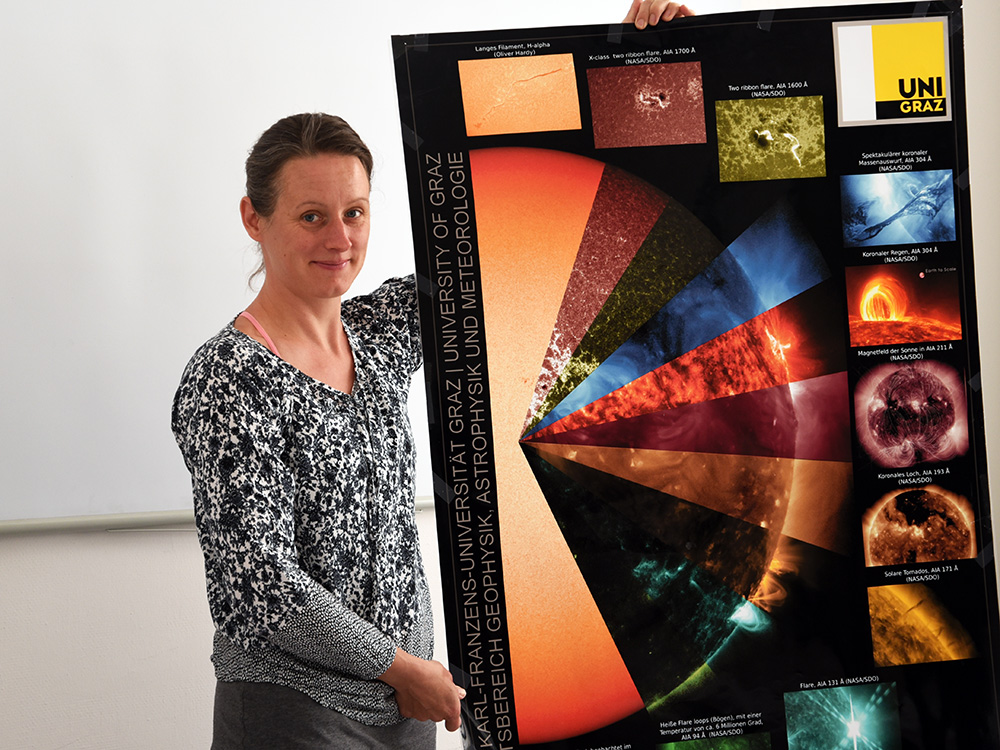
Von der Sonne angezogen: Julia Thalmann untersucht das Magnetfeld des Fixsterns. Foto: Uni Graz/Eklaude ©Uni Graz/Eklaude

Von der Sonne angezogen: Julia Thalmann untersucht das Magnetfeld des Fixsterns. Foto: Uni Graz/Eklaude

Astrophysikerin Julia Thalmann bekommt Arne-Richter-Award der European Geosciences Union

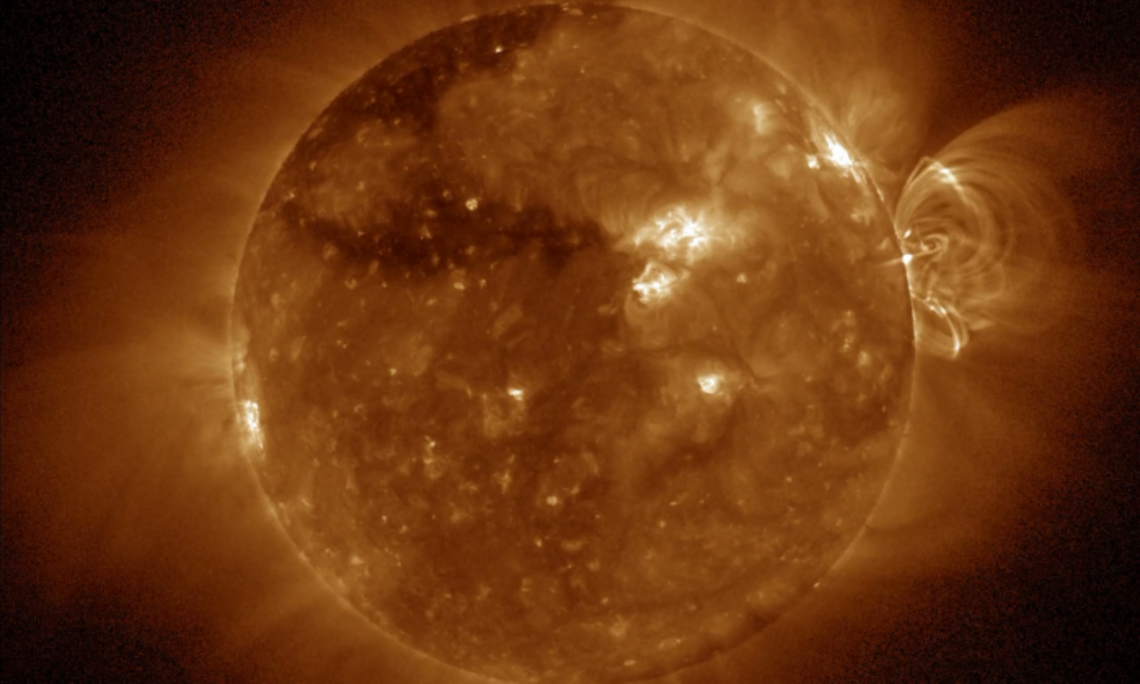
Das Magnetfeld der Sonne hat Julia Thalmann angezogen. Die 36-jährige Physikerin der Universität Graz widmet sich seit ihrer Dissertation diesem aktuell äußerst bedeutsamen Forschungsbereich. In ihrem soeben abgeschlossenen, vom Wissenschaftsfonds FWF geförderten Projekt analysierte sie die Eigenschaften und Charakteristiken des Magnetfeldes, die mit Sonnenausbrüchen – sogenannten Flares – in Verbindung stehen. Solche haben mitunter gravierende Auswirkungen auf die Erde, weil sie unter anderem die Funktion zahlreicher Satelliten beeinträchtigen. Thalmanns Arbeiten haben internationales Interesse geweckt, da sie wesentlich zum besseren Verständnis der Konsequenzen von Flare-bedingten Schwankungen im solaren Magnetfeld beitragen. Aus diesem Grund erhält Thalmann heute den Arne-Richter-Award für herausragende junge WissenschafterInnen, den die European Geosciences Union in ihrer Generalversammlung in Wien an insgesamt vier NachwuchsforscherInnen weltweit vergibt.

Julia Thalmann studierte an der Karl-Franzens-Universität Graz Physik mit Schwerpunkt Astrophysik und schloss das Diplomstudium 2006 mit Auszeichnung ab. Im Laufe eines mehr als sechsjährigen Forschungsaufenthalts am Max-Planck-Institut für Sonnensystemforschung in Göttingen konnte sie sich mit ihrer wissenschaftlichen Arbeit international etablieren. 2010 promovierte Thalmann magna cum laude an der Technischen Universität Braunschweig, seit 2013 ist sie wieder als Mitglied der von Astrid Veronig geleiteten Arbeitsgruppe Physik der Sonne und der Heliosphäre an der Uni Graz tätig. Im November 2016 wurde sie bereits mit dem internationalen Alexander-Chizhevsky-Preis für Space Weather and Space Climate ausgezeichnet.

created by Dagmar Eklaude

Related news

Teaching vignettes for working with Arduino in teacher education

The field of physics education focuses, among other things, on how pre-service teachers can be supported in using digital media effectively in science education. One area of research specifically addresses digital data acquisition using Arduino microcontrollers.

Flawlessness defying imperfection

Researchers from the OpNaQ group (Banzer) at the University of Graz and international partners have demonstrated a miniaturized silicon‑nitride photonic chip that can precisely measure the polarization of visible light, even though some of its own components are imperfect. The work, published recently in Advanced Photonics Nexus, demonstrates a new class of passive, compact, and high‑speed on‑chip polarimeters designed for applications ranging from biomedical imaging to quantum communication.

How Do Adolescents Evaluate the Credibility of Instagram Posts?

A new article has been published in the Journal of Baltic Science Education.

Shaping the Future of Sensing, Together

The Christian Doppler Laboratory for Structured Matter Based Sensing (CDL-SMBS) is entering a new phase following its successful first evaluation at the end of 2024, and two expansions in 2024 and more recently in 2026.

Begin of page section:
Additional information:

University of Graz
Universitaetsplatz 3
8010 Graz
Austria
  • Contact
  • Web Editors
  • Moodle
  • UNIGRAZonline
  • Imprint
  • Data Protection Declaration
  • Accessibility Declaration
Weatherstation
Uni Graz

End of this page section. Go to overview of page sections

End of this page section. Go to overview of page sections

Begin of page section:

End of this page section. Go to overview of page sections