Begin of page section:
Page sections:

  • Go to contents (Accesskey 1)
  • Go to position marker (Accesskey 2)
  • Go to main navigation (Accesskey 3)
  • Go to sub navigation (Accesskey 4)
  • Go to additional information (Accesskey 5)
  • Go to page settings (user/language) (Accesskey 8)
  • Go to search (Accesskey 9)

End of this page section. Go to overview of page sections

Begin of page section:
Page settings:

English en
Deutsch de
Search
Login

End of this page section. Go to overview of page sections

Begin of page section:
Search:

Search for details about Uni Graz
Close

End of this page section. Go to overview of page sections


Search

Begin of page section:
Main navigation:

Page navigation:

  • University

    University
    • About the University
    • Organisation
    • Faculties
    • Library
    • Working at University of Graz
    • Campus
    Developing solutions for the world of tomorrow - that is our mission. Our students and our researchers take on the great challenges of society and carry the knowledge out.
  • Research Profile

    Research Profile
    • Our Expertise
    • Research Questions
    • Research Portal
    • Promoting Research
    • Research Transfer
    • Ethics in Research
    • Commission for Scientific Integrity
    Scientific excellence and the courage to break new ground. Research at the University of Graz creates the foundations for making the future worth living.
  • Studies

    Studies
    • Prospective Students
    • Students
  • Community

    Community
    • International
    • Location
    • Research and Business
    • Alumni
    The University of Graz is a hub for international research and brings together scientists and business experts. Moreover, it fosters the exchange and cooperation in study and teaching.
Topics
  • Sustainable University
  • Researchers answer
  • Work for us
Close menu

End of this page section. Go to overview of page sections

Begin of page section:
You are here:

University of Graz Natural sciences Institute of Physics News Historically important research site
  • About the institute
  • Our research
  • Personalities
  • Student Services
  • News
  • Events

End of this page section. Go to overview of page sections

Monday, 27 November 2023

Historically important research site

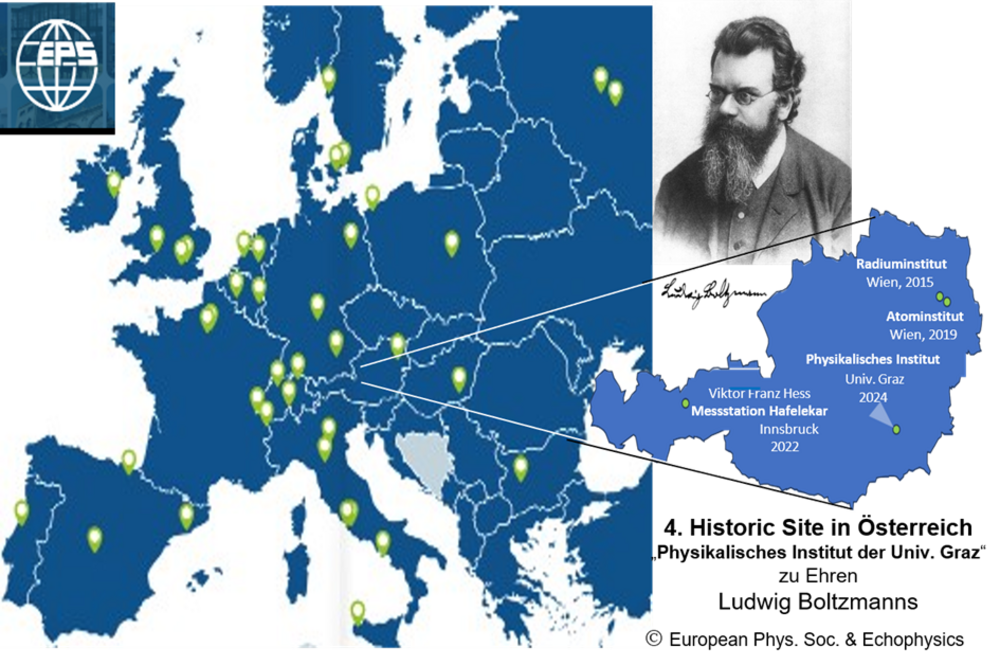
Historically important research sites of the European Physical Society (EPS). Image: European Phys. Soc. & Echophysics

Historically important research sites of the European Physical Society (EPS). Image: European Phys. Soc. & Echophysics

The Institute of Physics has been honored as „Historic Site" by the European Physical Society (EPS).

To date, there are 64 such historically important research sites in physics worldwide. By resolution of the European Physical Society (EPS) on November 16, 2023, the building of the Institute of Physics at the University of Graz, which was built between 1872 and 1875, has now been honored with the high distinction of Historic Site. This is the fourth award in Austria. Ludwig Boltzmann (1844 - 1906) acts as the central person on the occasion of the 180th anniversary of his birth. In 1876, in his second professorship in Graz as full professor of (general and experimental) physics, he moved into the newly constructed institute building, which was considered one of the most modern physics research facilities at the time. The nomination goes back to an initiative of the First European Center for the History of Physics (ECHOPHYSICS). In addition to the unveiling of a commemorative plaque, a symposium with international guests is planned for 2024.

Time travel through the history of the University of Graz:
https://1585-tomorrow.uni-graz.at/de/#/

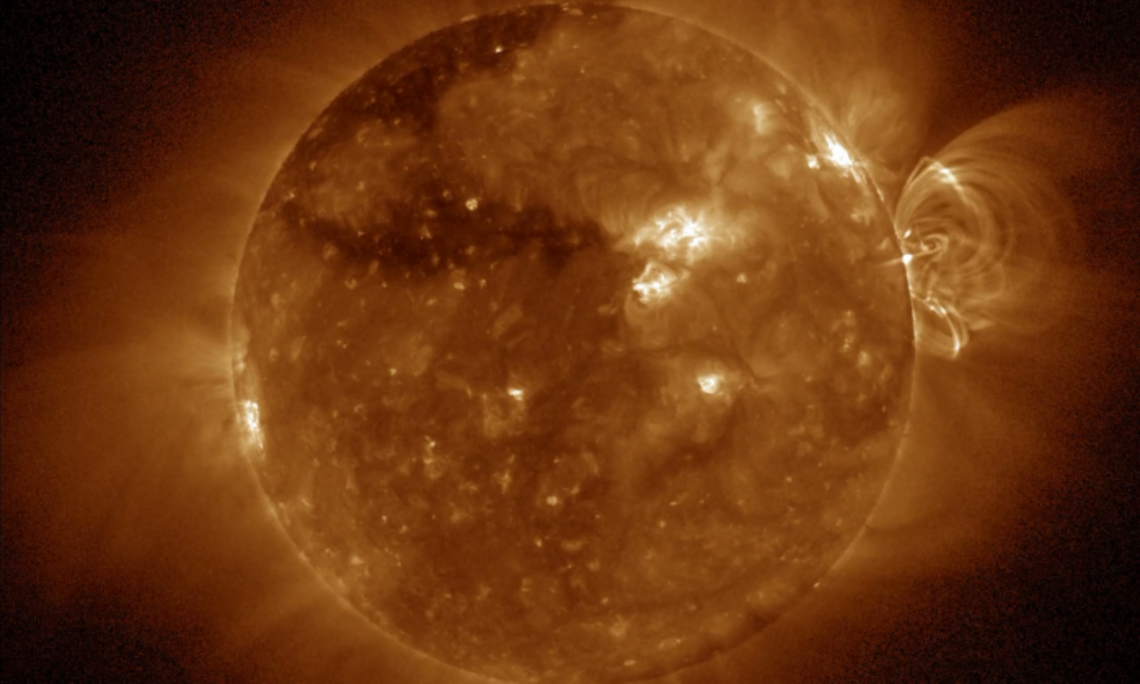
created by Heinz Krenn

Related news

Teaching vignettes for working with Arduino in teacher education

The field of physics education focuses, among other things, on how pre-service teachers can be supported in using digital media effectively in science education. One area of research specifically addresses digital data acquisition using Arduino microcontrollers.

Flawlessness defying imperfection

Researchers from the OpNaQ group (Banzer) at the University of Graz and international partners have demonstrated a miniaturized silicon‑nitride photonic chip that can precisely measure the polarization of visible light, even though some of its own components are imperfect. The work, published recently in Advanced Photonics Nexus, demonstrates a new class of passive, compact, and high‑speed on‑chip polarimeters designed for applications ranging from biomedical imaging to quantum communication.

How Do Adolescents Evaluate the Credibility of Instagram Posts?

A new article has been published in the Journal of Baltic Science Education.

Shaping the Future of Sensing, Together

The Christian Doppler Laboratory for Structured Matter Based Sensing (CDL-SMBS) is entering a new phase following its successful first evaluation at the end of 2024, and two expansions in 2024 and more recently in 2026.

Begin of page section:
Additional information:

University of Graz
Universitaetsplatz 3
8010 Graz
Austria
  • Contact
  • Web Editors
  • Moodle
  • UNIGRAZonline
  • Imprint
  • Data Protection Declaration
  • Accessibility Declaration
Weatherstation
Uni Graz

End of this page section. Go to overview of page sections

End of this page section. Go to overview of page sections

Begin of page section:

End of this page section. Go to overview of page sections