Begin of page section:
Page sections:

  • Go to contents (Accesskey 1)
  • Go to position marker (Accesskey 2)
  • Go to main navigation (Accesskey 3)
  • Go to sub navigation (Accesskey 4)
  • Go to additional information (Accesskey 5)
  • Go to page settings (user/language) (Accesskey 8)
  • Go to search (Accesskey 9)

End of this page section. Go to overview of page sections

Begin of page section:
Page settings:

English en
Deutsch de
Search
Login

End of this page section. Go to overview of page sections

Begin of page section:
Search:

Search for details about Uni Graz
Close

End of this page section. Go to overview of page sections


Search

Begin of page section:
Main navigation:

Page navigation:

  • University

    University
    • About the University
    • Organisation
    • Faculties
    • Library
    • Working at University of Graz
    • Campus
    Developing solutions for the world of tomorrow - that is our mission. Our students and our researchers take on the great challenges of society and carry the knowledge out.
  • Research Profile

    Research Profile
    • Our Expertise
    • Research Questions
    • Research Portal
    • Promoting Research
    • Research Transfer
    • Ethics in Research
    • Commission for Scientific Integrity
    Scientific excellence and the courage to break new ground. Research at the University of Graz creates the foundations for making the future worth living.
  • Studies

    Studies
    • Prospective Students
    • Students
  • Community

    Community
    • International
    • Location
    • Research and Business
    • Alumni
    The University of Graz is a hub for international research and brings together scientists and business experts. Moreover, it fosters the exchange and cooperation in study and teaching.
Topics
  • Sustainable University
  • Researchers answer
  • Work for us
Close menu

End of this page section. Go to overview of page sections

Begin of page section:
You are here:

University of Graz Natural sciences Institute of Physics News Kollege Axel Maas
  • About the institute
  • Our research
  • Personalities
  • Student Services
  • News
  • Events

End of this page section. Go to overview of page sections

Thursday, 23 April 2015

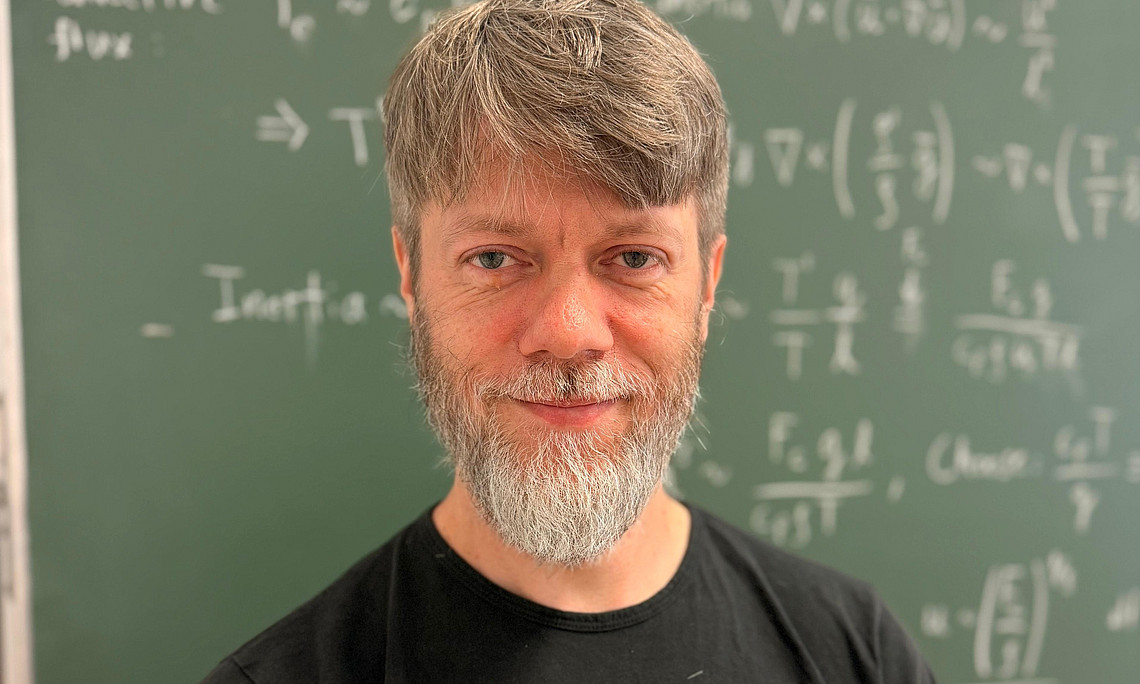
Kollege Axel Maas

2015 OUTSTANDING REFEREE of Physical Review and Physical Review Letter

Kürzlich wurde unser Kollege Axel Maas zu einem hervorragenden Gutachter (einer von 142 im Jahre 2015) der Journale Physical Review and Physical Review Letter gewählt. Dies ist in mehrerlei Hinsicht bemerkenswert: Diese beiden Journale sind die traditionell top Physikjournale der American Physical Society (APS). Dementsprechend groß ist der Pool an Referees. Weiters erfolgt das Verfassen von Gutachten auf freiwilliger Basis und bleibt finanziell unbelohnt. Die Bedeutung dieser Auszeichnung wird wohl durch die offizielle E-Mail (siehe unten) am besten dargelegt.
Axel, wir gratulieren!


Dear Dr. Poetz:
It is with pleasure that I am able to inform you that the following member of your faculty is among the 142 Outstanding Referees of the Physical Review and Physical Review Letters journals, as chosen by the journal editors for 2015.
Axel Maas
Initiated in 2008, the Outstanding Referee program expresses appreciation for the essential work that anonymous peer reviewers do for our journals. Each year a small percentage of our 65,000 active referees are selected and honored with the Outstanding Referee designation. Selections are made based on the number, quality, and timeliness of referee reports as collected in a database over the last 30 years. The program will recognize about 150 referees each year, although larger groups were selected in 2008 and 2009. A full listing and further details on the program are available here:http://publish.aps.org/OutstandingReferees.  I am also attaching a press release that your institution might use if it wishes to publicize the honor that your faculty member has received.
Please allow me to congratulate you and your faculty member on this honor, and thank you for your support and contributions to the APS journals and to the physics community.
Sincerely,

Gene D. Sprouse
Editor in Chief
American Physical Society

created by Bianca Reicher

Related news

Teaching vignettes for working with Arduino in teacher education

The field of physics education focuses, among other things, on how pre-service teachers can be supported in using digital media effectively in science education. One area of research specifically addresses digital data acquisition using Arduino microcontrollers.

Flawlessness defying imperfection

Researchers from the OpNaQ group (Banzer) at the University of Graz and international partners have demonstrated a miniaturized silicon‑nitride photonic chip that can precisely measure the polarization of visible light, even though some of its own components are imperfect. The work, published recently in Advanced Photonics Nexus, demonstrates a new class of passive, compact, and high‑speed on‑chip polarimeters designed for applications ranging from biomedical imaging to quantum communication.

How Do Adolescents Evaluate the Credibility of Instagram Posts?

A new article has been published in the Journal of Baltic Science Education.

Shaping the Future of Sensing, Together

The Christian Doppler Laboratory for Structured Matter Based Sensing (CDL-SMBS) is entering a new phase following its successful first evaluation at the end of 2024, and two expansions in 2024 and more recently in 2026.

Begin of page section:
Additional information:

University of Graz
Universitaetsplatz 3
8010 Graz
Austria
  • Contact
  • Web Editors
  • Moodle
  • UNIGRAZonline
  • Imprint
  • Data Protection Declaration
  • Accessibility Declaration
Weatherstation
Uni Graz

End of this page section. Go to overview of page sections

End of this page section. Go to overview of page sections

Begin of page section:

End of this page section. Go to overview of page sections