Begin of page section:
Page sections:

  • Go to contents (Accesskey 1)
  • Go to position marker (Accesskey 2)
  • Go to main navigation (Accesskey 3)
  • Go to sub navigation (Accesskey 4)
  • Go to additional information (Accesskey 5)
  • Go to page settings (user/language) (Accesskey 8)
  • Go to search (Accesskey 9)

End of this page section. Go to overview of page sections

Begin of page section:
Page settings:

English en
Deutsch de
Search
Login

End of this page section. Go to overview of page sections

Begin of page section:
Search:

Search for details about Uni Graz
Close

End of this page section. Go to overview of page sections


Search

Begin of page section:
Main navigation:

Page navigation:

  • University

    University
    • About the University
    • Organisation
    • Faculties
    • Library
    • Working at University of Graz
    • Campus
    Developing solutions for the world of tomorrow - that is our mission. Our students and our researchers take on the great challenges of society and carry the knowledge out.
  • Research Profile

    Research Profile
    • Our Expertise
    • Research Questions
    • Research Portal
    • Promoting Research
    • Research Transfer
    • Ethics in Research
    • Commission for Scientific Integrity
    Scientific excellence and the courage to break new ground. Research at the University of Graz creates the foundations for making the future worth living.
  • Studies

    Studies
    • Prospective Students
    • Students
    • Registration for Study Programme (Winter semester 2026/27)
    • Welcome Weeks for First Year Students
  • Community

    Community
    • International
    • Location
    • Research and Business
    • Alumni
    The University of Graz is a hub for international research and brings together scientists and business experts. Moreover, it fosters the exchange and cooperation in study and teaching.
Topics
  • Sustainable University
  • Researchers answer
  • Work for us
Close menu

End of this page section. Go to overview of page sections

Begin of page section:
You are here:

University of Graz Natural sciences Institute of Physics News Lichtkräfte im Nanobereich
  • About the institute
  • Our research
  • Personalities
  • Student Services
  • News
  • Events

End of this page section. Go to overview of page sections

Tuesday, 28 July 2020

Lichtkräfte im Nanobereich

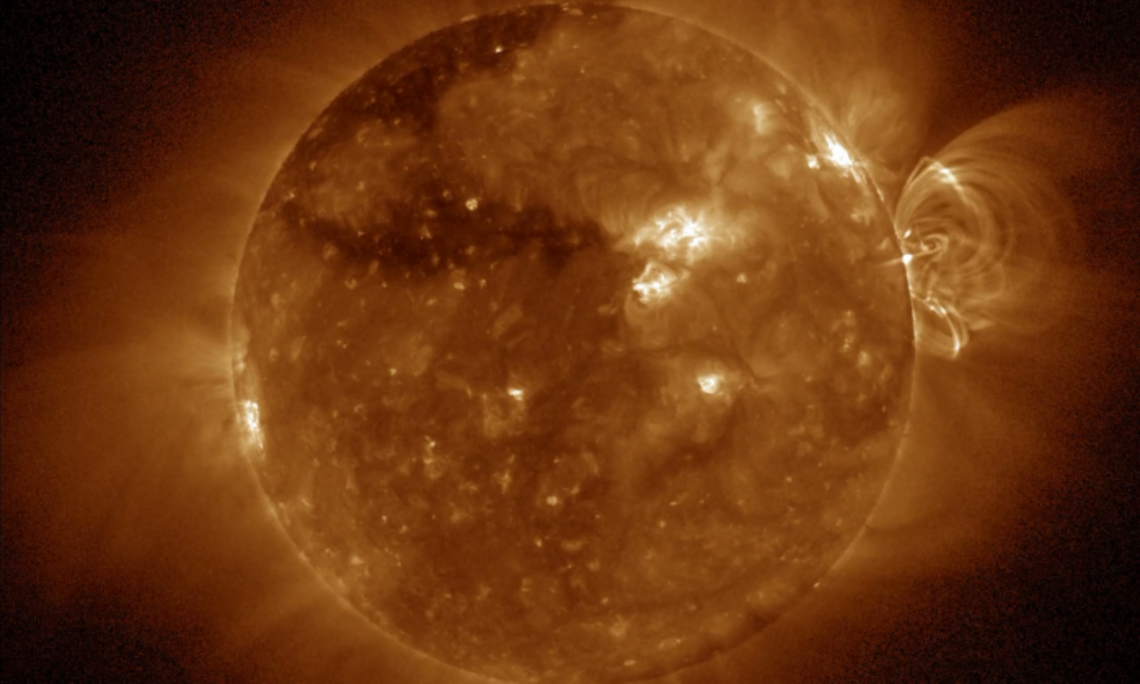
Simulation von Licht im Nanometerbereich ©Uni Graz/U. Hohenester

©Uni Graz/U. Hohenester

Simulation von Licht im Nanometerbereich
Optische Kräfte ermöglichen die Charakterisierung von Nanopartikeln

Durch Licht können merkliche Kräfte auf Nanopartikel übertragen werden. Für dieses Prinzip wurde der Physiknobelpreis 2018 an Arthur Ashkin verliehen. Indem man beobachtet, wie Lichtkräfte auf unbekannte Nanopartikel wirken, kann auf die Größe, Form und Beschichtung der Teilchen rückgeschlossen werden. Auf dieser Basis wird derzeit an der Med Uni Graz ein lichtbasiertes Durchflussverfahren entwickelt, die theoretische Beschreibung dazu erfolgt in der Arbeitsgruppe von Ulrich Hohenester vom Fachbereich Theoretische Physik an der Karl-Franzens-Universität Graz.

Seit Anfang April arbeitet Marko Simic in der Arbeitsgruppe von Ulrich Hohenester an seiner Dokoktorarbeit zur Simulation und Modellierung von opto-fluidischen Kräften im Nanobereich. Die Arbeit erfolgt im Rahmen des EU Projektes NanoPAT und in enger Kooperation mit der Arbeitsgruppe von Christian Hill am Gottfried Schatz Forschungszentrum an der Med Uni Graz, die derzeit an der Entwicklung eines Messgerätes arbeitet, mit dem unterschiedliche Proben während des Herstellungsprozesses kontinuierlich in Echtzeit und hochpräzise gemessen werden können. Mögliche Anwendungen der neuartigen Messtechnik reichen von der medizinischen Diagnostik zur Materialanalyse verschiedenster Nanopartikel. Ziel der Doktorarbeit von Marko Simic ist die Simulation von optischen Kräften in stark fokussierten Laserfeldern sowie ein verbessertes Verständnis, wie aus den Trajektorien von Nanopartikel in mikrofluidischen Kanälen unter Einfluss von Lichtkräften auf die Teilcheneigenschaften rückgeschlossen werden kann.

Links:
Arbeitsgruppe Ulrich Hohenester
Arbeitsgruppe Christian Hill
NanoPAT

created by Ulrich Hohenester

Related news

Future Education Talk with Angelika Bernsteiner and Lilith Rüschenpöhler

How Young People Can Help Shape Research

Nano but Mighty: Innovations in confined spaces

At the University of Graz, Peter Banzer and his team (OpNaQ group) are controlling light in extremely confined spaces, enabling entirely new applications in physics, biology, and medicine. By precisely tailoring light fields at the nanometer scale, they can exert forces, extract information, and make hidden features visible.

Gold Medal of Honour for Willibald Plessas

On 11 June 2026, Willibald Plessas was awarded the Golden Medal of Honour for Services to the Republic of Austria in the auditorium of the Old University of Graz.

A quantum black hole?

First hints for a bound state of gravitons, which could be a primordial black hole

Begin of page section:
Additional information:

University of Graz
Universitaetsplatz 3
8010 Graz
Austria
  • Contact
  • Web Editors
  • Moodle
  • UNIGRAZonline
  • Imprint
  • Data Protection Declaration
  • Accessibility Declaration
Weatherstation
Uni Graz

End of this page section. Go to overview of page sections

End of this page section. Go to overview of page sections

Begin of page section:

End of this page section. Go to overview of page sections