Begin of page section:
Page sections:

  • Go to contents (Accesskey 1)
  • Go to position marker (Accesskey 2)
  • Go to main navigation (Accesskey 3)
  • Go to sub navigation (Accesskey 4)
  • Go to additional information (Accesskey 5)
  • Go to page settings (user/language) (Accesskey 8)
  • Go to search (Accesskey 9)

End of this page section. Go to overview of page sections

Begin of page section:
Page settings:

English en
Deutsch de
Search
Login

End of this page section. Go to overview of page sections

Begin of page section:
Search:

Search for details about Uni Graz
Close

End of this page section. Go to overview of page sections


Search

Begin of page section:
Main navigation:

Page navigation:

  • University

    University
    • About the University
    • Organisation
    • Faculties
    • Library
    • Working at University of Graz
    • Campus
    Developing solutions for the world of tomorrow - that is our mission. Our students and our researchers take on the great challenges of society and carry the knowledge out.
  • Research Profile

    Research Profile
    • Our Expertise
    • Research Questions
    • Research Portal
    • Promoting Research
    • Research Transfer
    • Ethics in Research
    Scientific excellence and the courage to break new ground. Research at the University of Graz creates the foundations for making the future worth living.
  • Studies

    Studies
    • Prospective Students
    • Students
  • Community

    Community
    • International
    • Location
    • Research and Business
    • Alumni
    The University of Graz is a hub for international research and brings together scientists and business experts. Moreover, it fosters the exchange and cooperation in study and teaching.
  • Spotlight
Topics
  • Our digital Advent calendar
  • Sustainable University
  • Researchers answer
  • Work for us
Close menu

End of this page section. Go to overview of page sections

Begin of page section:
You are here:

University of Graz Natural sciences Institute of Physics News Nachtschwärmen
  • About the institute
  • Our research
  • Personalities
  • Student Services
  • News
  • Events

End of this page section. Go to overview of page sections

Wednesday, 18 July 2018

Nachtschwärmen
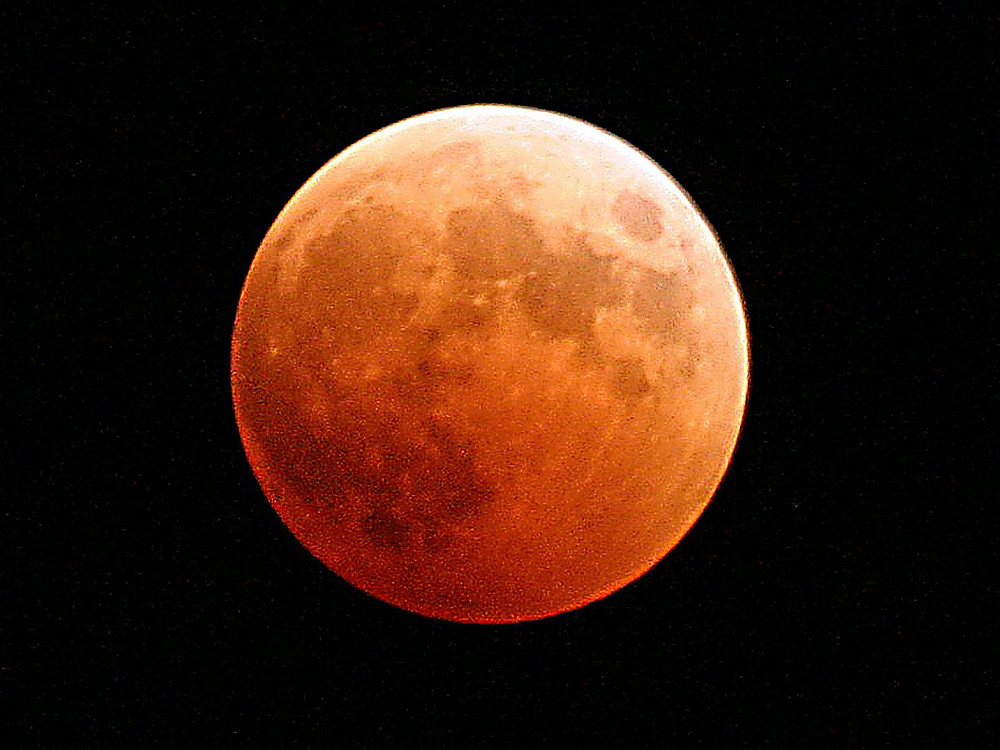
Der verfinsterte Vollmond ist am 27. Juli besonders lang als blutrote Scheibe zu sehen. Foto: Pixabay

Der verfinsterte Vollmond ist am 27. Juli besonders lang als blutrote Scheibe zu sehen. Foto: Pixabay

Blutmond und Mars rücken sich am 27. Juli imposant ins Sternenbild

Am 27. Juli kann man in Graz die längste totale Mondfinsternis in diesem Jahrhundert beobachten – die totale Verfinsterung wird über 100 Minuten lang andauern. Wenn der Mond um 20.30 Uhr aufgeht, wird er schon zu acht Prozent verfinstert sein. Von 21.30 bis 23.14 Uhr befindet sich der Trabant gänzlich im Schatten der Erde und ist als blutrote Scheibe zu sehen. Ab 00.19 Uhr strahlt er wieder voll.
„Die Umlaufbahn des Mondes um unseren Planeten ist elliptisch, daher bewegt er sich scheinbar langsamer, je weiter er von der Erde entfernt ist“, nennt Astrophysiker Arnold Hanslmeier den Grund für die außergewöhnlich lange Verfinsterung. Was das seltene Phänomen für begeisterte SternenguckerInnen noch interessanter macht: In derselben Nacht steht der Mars in erdnaher Opposition. „Das heißt, er steht der Sonne gegenüber und geht genau dann auf, wenn sie untergeht. Außerdem ist er ‚nur‘ 56 Millionen Kilometer von unserem Planeten entfernt, was lediglich alle 15 Jahre vorkommt“, beschreibt Hanslmeier. Dadurch ist der Mars auch für LaiInnen deutlich als hell-rötlicher Stern unter dem verfinsterten Mond zu beobachten.
Nachtschwärmer und Hobby-Astronominnen können am 27. Juli von 20 bis 24 Uhr ans Observatorium Lustbühel kommen und dort unter fachkundiger Anleitung die Himmelsphänomene verfolgen.

created by Dagmar Eklaude

Related news

New FWF – WEAVE Project "Longer Acenes: Synthesis, Interfaces, and Thin Films"

Unlocking the Potential of Longer Acenes: A New Era in Organic Electronics

Two Awards for an Outstanding Dissertation

Andreas Windischbacher received two prestigious awards for his outstanding doctoral dissertation. On March 17th, 2025, he was presented with the golden ring of honour of the Republic of Austria by our Federal President as part of the Promotio sub auspiciis Praesidentis rei publicae. On the same day, he was also selected for the Josef Krainer Förderungspreis, whose ceremonial presentation, however, took place later on November 12th, 2025.

NanoGraz Careers & Ideas Days 2025: Career paths after the doctorate

On October 13 and 14, the consortium NanoGraz of the Research Career Campus at the University of Graz organized a two-day event to inform the consortium's doctoral students about their career options after completing their doctorate. In addition to exciting lectures by early-career researchers as well as representatives from industry, the Austrian Science Fund (FWF), and the research management of the University of Graz, a brainstorming competition took place on the second day, in which the participants had the opportunity to develop their own joint mini-projects.

Seed-Funding Grant: Bringing Ideas to Life Together

With the new OpNaQ Seed-Funding Grant, the OpNaQ Group, part of the Institute of Physics, lifts collaboration within the research group to a whole new level, and supports sub-groups in turning their ideas into concrete projects.

Begin of page section:
Additional information:

University of Graz
Universitaetsplatz 3
8010 Graz
Austria
  • Contact
  • Web Editors
  • Moodle
  • UNIGRAZonline
  • Imprint
  • Data Protection Declaration
  • Accessibility Declaration
Weatherstation
Uni Graz

End of this page section. Go to overview of page sections

End of this page section. Go to overview of page sections

Begin of page section:

End of this page section. Go to overview of page sections