Begin of page section:
Page sections:

  • Go to contents (Accesskey 1)
  • Go to position marker (Accesskey 2)
  • Go to main navigation (Accesskey 3)
  • Go to sub navigation (Accesskey 4)
  • Go to additional information (Accesskey 5)
  • Go to page settings (user/language) (Accesskey 8)
  • Go to search (Accesskey 9)

End of this page section. Go to overview of page sections

Begin of page section:
Page settings:

English en
Deutsch de
Search
Login

End of this page section. Go to overview of page sections

Begin of page section:
Search:

Search for details about Uni Graz
Close

End of this page section. Go to overview of page sections


Search

Begin of page section:
Main navigation:

Page navigation:

  • University

    University
    • About the University
    • Organisation
    • Faculties
    • Library
    • Working at University of Graz
    • Campus
    Developing solutions for the world of tomorrow - that is our mission. Our students and our researchers take on the great challenges of society and carry the knowledge out.
  • Research Profile

    Research Profile
    • Our Expertise
    • Research Questions
    • Research Portal
    • Promoting Research
    • Research Transfer
    • Ethics in Research
    • Commission for Scientific Integrity
    Scientific excellence and the courage to break new ground. Research at the University of Graz creates the foundations for making the future worth living.
  • Studies

    Studies
    • Prospective Students
    • Students
  • Community

    Community
    • International
    • Location
    • Research and Business
    • Alumni
    The University of Graz is a hub for international research and brings together scientists and business experts. Moreover, it fosters the exchange and cooperation in study and teaching.
Topics
  • Sustainable University
  • Researchers answer
  • Work for us
Close menu

End of this page section. Go to overview of page sections

Begin of page section:
You are here:

University of Graz Natural sciences Institute of Physics News Nachtschwärmen
  • About the institute
  • Our research
  • Personalities
  • Student Services
  • News
  • Events

End of this page section. Go to overview of page sections

Wednesday, 18 July 2018

Nachtschwärmen

Der verfinsterte Vollmond ist am 27. Juli besonders lang als blutrote Scheibe zu sehen. Foto: Pixabay

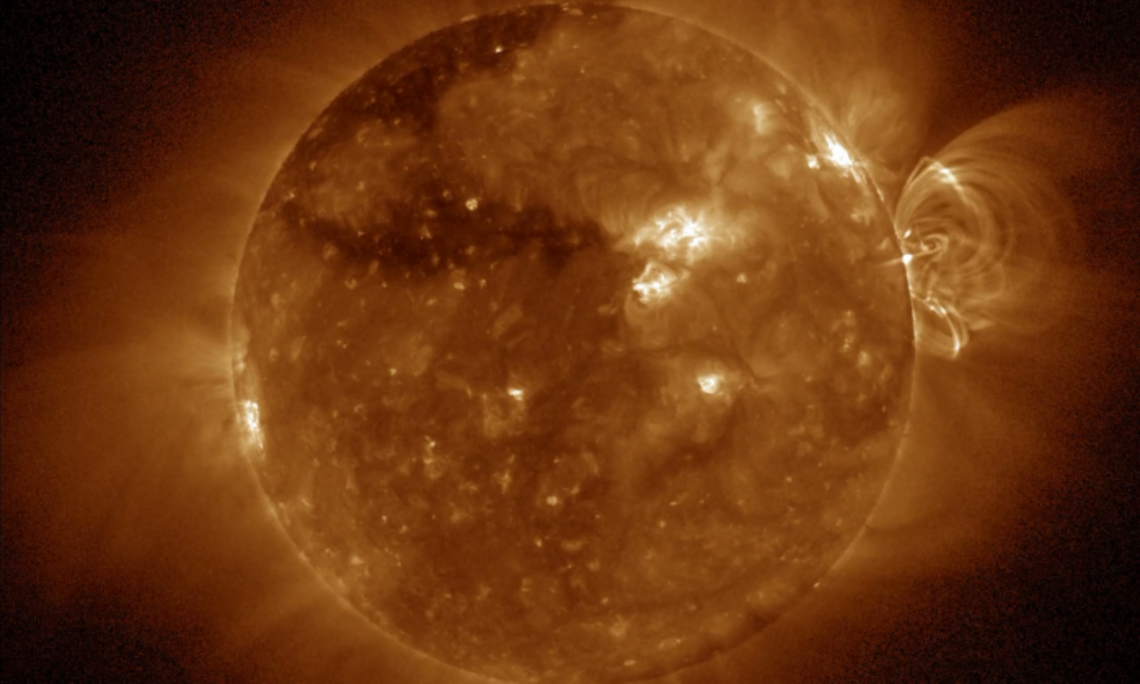
Der verfinsterte Vollmond ist am 27. Juli besonders lang als blutrote Scheibe zu sehen. Foto: Pixabay
Blutmond und Mars rücken sich am 27. Juli imposant ins Sternenbild

Am 27. Juli kann man in Graz die längste totale Mondfinsternis in diesem Jahrhundert beobachten – die totale Verfinsterung wird über 100 Minuten lang andauern. Wenn der Mond um 20.30 Uhr aufgeht, wird er schon zu acht Prozent verfinstert sein. Von 21.30 bis 23.14 Uhr befindet sich der Trabant gänzlich im Schatten der Erde und ist als blutrote Scheibe zu sehen. Ab 00.19 Uhr strahlt er wieder voll.
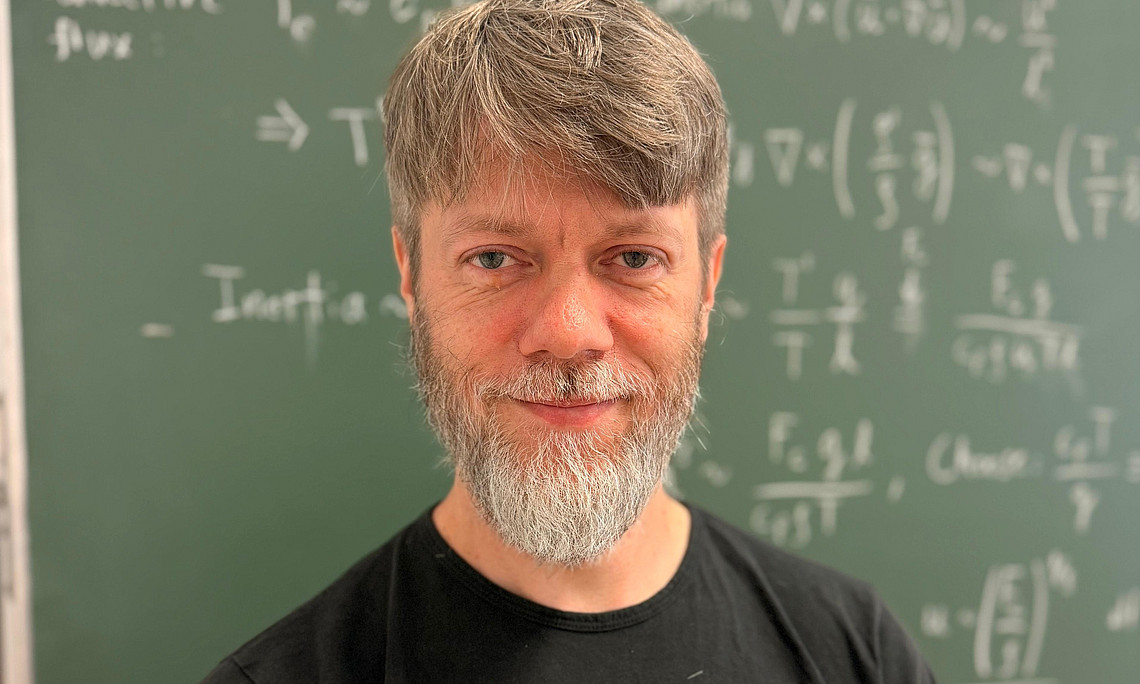
„Die Umlaufbahn des Mondes um unseren Planeten ist elliptisch, daher bewegt er sich scheinbar langsamer, je weiter er von der Erde entfernt ist“, nennt Astrophysiker Arnold Hanslmeier den Grund für die außergewöhnlich lange Verfinsterung. Was das seltene Phänomen für begeisterte SternenguckerInnen noch interessanter macht: In derselben Nacht steht der Mars in erdnaher Opposition. „Das heißt, er steht der Sonne gegenüber und geht genau dann auf, wenn sie untergeht. Außerdem ist er ‚nur‘ 56 Millionen Kilometer von unserem Planeten entfernt, was lediglich alle 15 Jahre vorkommt“, beschreibt Hanslmeier. Dadurch ist der Mars auch für LaiInnen deutlich als hell-rötlicher Stern unter dem verfinsterten Mond zu beobachten.
Nachtschwärmer und Hobby-Astronominnen können am 27. Juli von 20 bis 24 Uhr ans Observatorium Lustbühel kommen und dort unter fachkundiger Anleitung die Himmelsphänomene verfolgen.

created by Dagmar Eklaude

Related news

Teaching vignettes for working with Arduino in teacher education

The field of physics education focuses, among other things, on how pre-service teachers can be supported in using digital media effectively in science education. One area of research specifically addresses digital data acquisition using Arduino microcontrollers.

Flawlessness defying imperfection

Researchers from the OpNaQ group (Banzer) at the University of Graz and international partners have demonstrated a miniaturized silicon‑nitride photonic chip that can precisely measure the polarization of visible light, even though some of its own components are imperfect. The work, published recently in Advanced Photonics Nexus, demonstrates a new class of passive, compact, and high‑speed on‑chip polarimeters designed for applications ranging from biomedical imaging to quantum communication.

How Do Adolescents Evaluate the Credibility of Instagram Posts?

A new article has been published in the Journal of Baltic Science Education.

Shaping the Future of Sensing, Together

The Christian Doppler Laboratory for Structured Matter Based Sensing (CDL-SMBS) is entering a new phase following its successful first evaluation at the end of 2024, and two expansions in 2024 and more recently in 2026.

Begin of page section:
Additional information:

University of Graz
Universitaetsplatz 3
8010 Graz
Austria
  • Contact
  • Web Editors
  • Moodle
  • UNIGRAZonline
  • Imprint
  • Data Protection Declaration
  • Accessibility Declaration
Weatherstation
Uni Graz

End of this page section. Go to overview of page sections

End of this page section. Go to overview of page sections

Begin of page section:

End of this page section. Go to overview of page sections