Begin of page section:
Page sections:

  • Go to contents (Accesskey 1)
  • Go to position marker (Accesskey 2)
  • Go to main navigation (Accesskey 3)
  • Go to sub navigation (Accesskey 4)
  • Go to additional information (Accesskey 5)
  • Go to page settings (user/language) (Accesskey 8)
  • Go to search (Accesskey 9)

End of this page section. Go to overview of page sections

Begin of page section:
Page settings:

English en
Deutsch de
Search
Login

End of this page section. Go to overview of page sections

Begin of page section:
Search:

Search for details about Uni Graz
Close

End of this page section. Go to overview of page sections


Search

Begin of page section:
Main navigation:

Page navigation:

  • University

    University
    • About the University
    • Organisation
    • Faculties
    • Library
    • Working at University of Graz
    • Campus
    Developing solutions for the world of tomorrow - that is our mission. Our students and our researchers take on the great challenges of society and carry the knowledge out.
  • Research Profile

    Research Profile
    • Our Expertise
    • Research Questions
    • Research Portal
    • Promoting Research
    • Research Transfer
    • Ethics in Research
    • Commission for Scientific Integrity
    Scientific excellence and the courage to break new ground. Research at the University of Graz creates the foundations for making the future worth living.
  • Studies

    Studies
    • Prospective Students
    • Students
    • Post-registration Law
  • Community

    Community
    • International
    • Location
    • Research and Business
    • Alumni
    The University of Graz is a hub for international research and brings together scientists and business experts. Moreover, it fosters the exchange and cooperation in study and teaching.
Topics
  • Sustainable University
  • Researchers answer
  • Work for us
Close menu

End of this page section. Go to overview of page sections

Begin of page section:
You are here:

University of Graz Natural sciences Institute of Physics News Photoacoustic perspectives
  • About the institute
  • Our research
  • Personalities
  • Student Services
  • News
  • Events

End of this page section. Go to overview of page sections

Tuesday, 01 December 2020

Photoacoustic perspectives

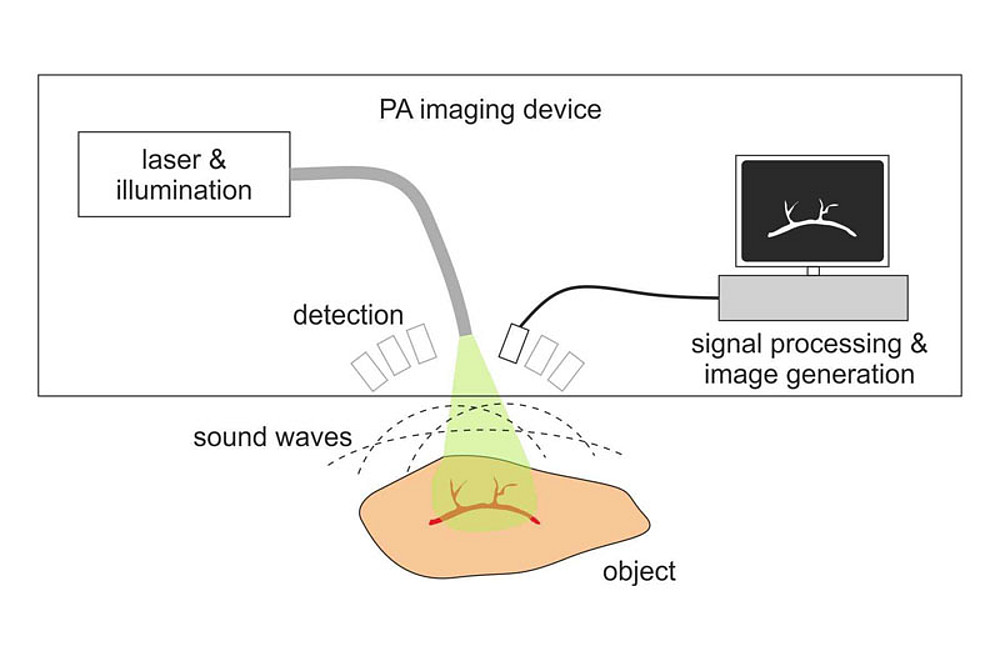
PAI-components. Image: Uni Graz/Paltauf

PAI-components. Image: Uni Graz/Paltauf

Guenther Paltauf and Robert Nuster give a perspective on potential clinical applications of photoacoustic imaging in a recently published article in the “Journal of Applied Physics”.

The method of photoacoustic imaging, based on the generation of ultrasound by irradiation with short laser pulses, has seen an enormous boost within the last 20 years. The main goal of this method is to look into biological tissue and to obtain sharp images of tissue structures, mainly the vasculature and the contained blood oxygenation. Implementations range from microscopy of shallow tissue regions to tomography, the latter enabling the imaging of structures as deep as several centimeters with sub-millimeter resolution, despite the diffuse light propagation. Numerous commercial instruments for preclinical research are already available. Currently, intensive developments of devices for clinical use are underway, with a main focus on tomography for the diagnostics of breast cancer.

The photoacoustic group of Guenther Paltauf and Robert Nuster, part of the work group “Optics of Nano and Quantum Materials,” has been involved for many years in research on special methods for ultrasound detection and image reconstruction in photoacoustic tomography and microscopy. Following an invitation by the Editor-in-chief of the “Journal of Applied Physics”, they have authored, together with Martin Frenz from the University of Bern, a “Perspective” article entitled „Progress in biomedical photoacoustic imaging instrumentation towards clinical application“ (https://doi.org/10.1063/5.0028190). In this paper, they give first an overview of recent developments related to instrumentation and image generation. This is followed by an outlook on possible future advances with the goal to take advantage of the unique properties of photoacoustic imaging in medical diagnostics. This includes the use of large ultrasound arrays for real-time three-dimensional imaging, the miniaturization of endoscopic probes, and the use of machine learning for data processing.

With the anticipated developments, the authors believe that within a couple of years various devices will be available for widespread clinical applications.

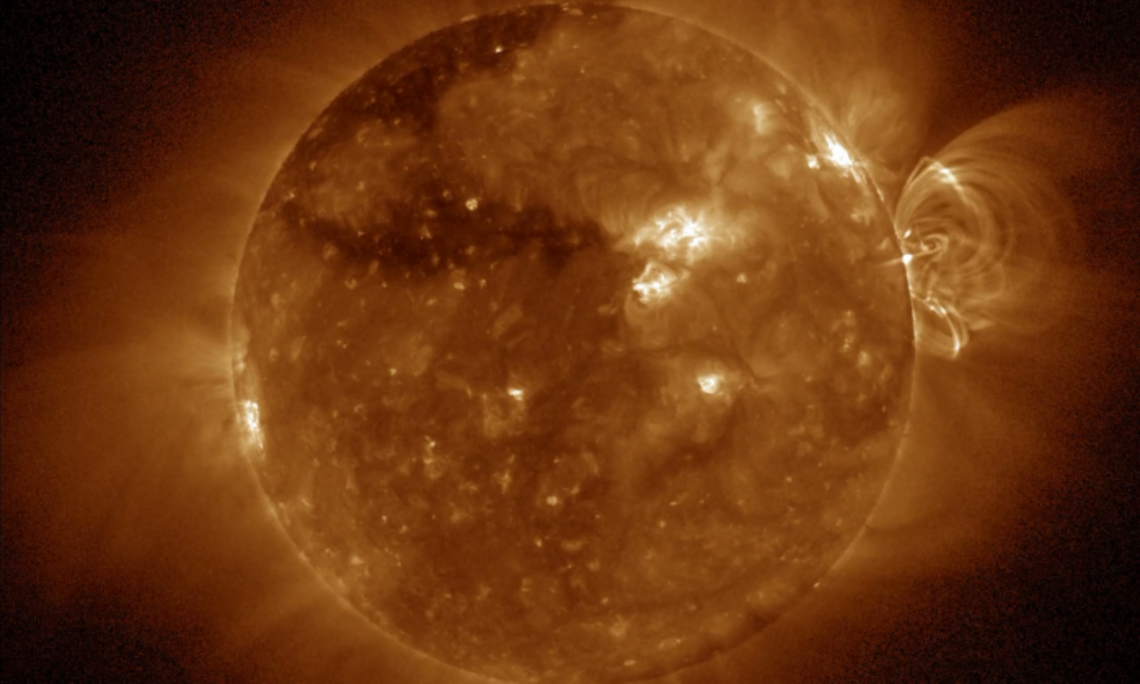
created by Günther Paltauf

Related news

Under Current

High-Resolution Imaging with Quantum Dots and Atomic Force Microscopy

The Josef Krainer „Förderungspreis“ goes to Stefan Purkhart

Stefan Purkhart from the Institute of Physics at the University of Graz has been awarded the Josef Krainer „Förderungspreis“ 2026 for his dissertation.

80 Jahre Innovation und Austausch

Der Fachbereich Physikdidaktik bei der 80. Fortbildungswoche für Physik- und Chemielehrkräfte in Wien

Committed to the highest standards

Three young researchers from the OpNaQ group gain insight into the world of standardization.

Begin of page section:
Additional information:

University of Graz
Universitaetsplatz 3
8010 Graz
Austria
  • Contact
  • Web Editors
  • Moodle
  • UNIGRAZonline
  • Imprint
  • Data Protection Declaration
  • Accessibility Declaration
Weatherstation
Uni Graz

End of this page section. Go to overview of page sections

End of this page section. Go to overview of page sections

Begin of page section:

End of this page section. Go to overview of page sections