Begin of page section:
Page sections:

  • Go to contents (Accesskey 1)
  • Go to position marker (Accesskey 2)
  • Go to main navigation (Accesskey 3)
  • Go to sub navigation (Accesskey 4)
  • Go to additional information (Accesskey 5)
  • Go to page settings (user/language) (Accesskey 8)
  • Go to search (Accesskey 9)

End of this page section. Go to overview of page sections

Begin of page section:
Page settings:

English en
Deutsch de
Search
Login

End of this page section. Go to overview of page sections

Begin of page section:
Search:

Search for details about Uni Graz
Close

End of this page section. Go to overview of page sections


Search

Begin of page section:
Main navigation:

Page navigation:

  • University

    University
    • About the University
    • Organisation
    • Faculties
    • Library
    • Working at University of Graz
    • Campus
    Developing solutions for the world of tomorrow - that is our mission. Our students and our researchers take on the great challenges of society and carry the knowledge out.
  • Research Profile

    Research Profile
    • Our Expertise
    • Research Questions
    • Research Portal
    • Promoting Research
    • Research Transfer
    • Ethics in Research
    • Commission for Scientific Integrity
    Scientific excellence and the courage to break new ground. Research at the University of Graz creates the foundations for making the future worth living.
  • Studies

    Studies
    • Prospective Students
    • Students
  • Community

    Community
    • International
    • Location
    • Research and Business
    • Alumni
    The University of Graz is a hub for international research and brings together scientists and business experts. Moreover, it fosters the exchange and cooperation in study and teaching.
Topics
  • Sustainable University
  • Researchers answer
  • Work for us
Close menu

End of this page section. Go to overview of page sections

Begin of page section:
You are here:

University of Graz Natural sciences Institute of Physics News Quantum Cinema
  • About the institute
  • Our research
  • Personalities
  • Student Services
  • News
  • Events

End of this page section. Go to overview of page sections

Tuesday, 25 October 2022

Quantum Cinema

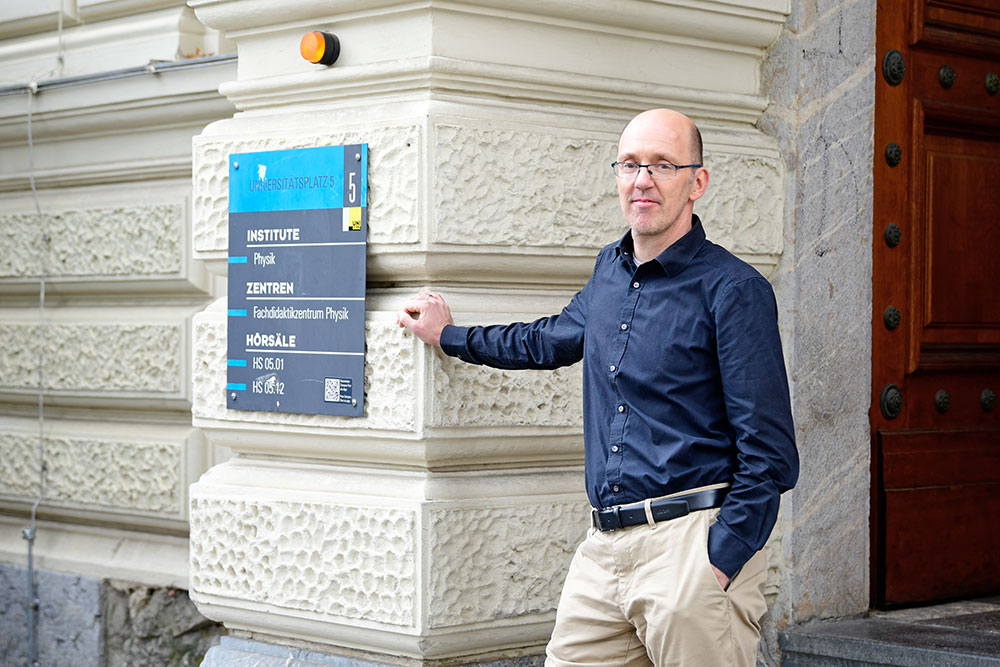
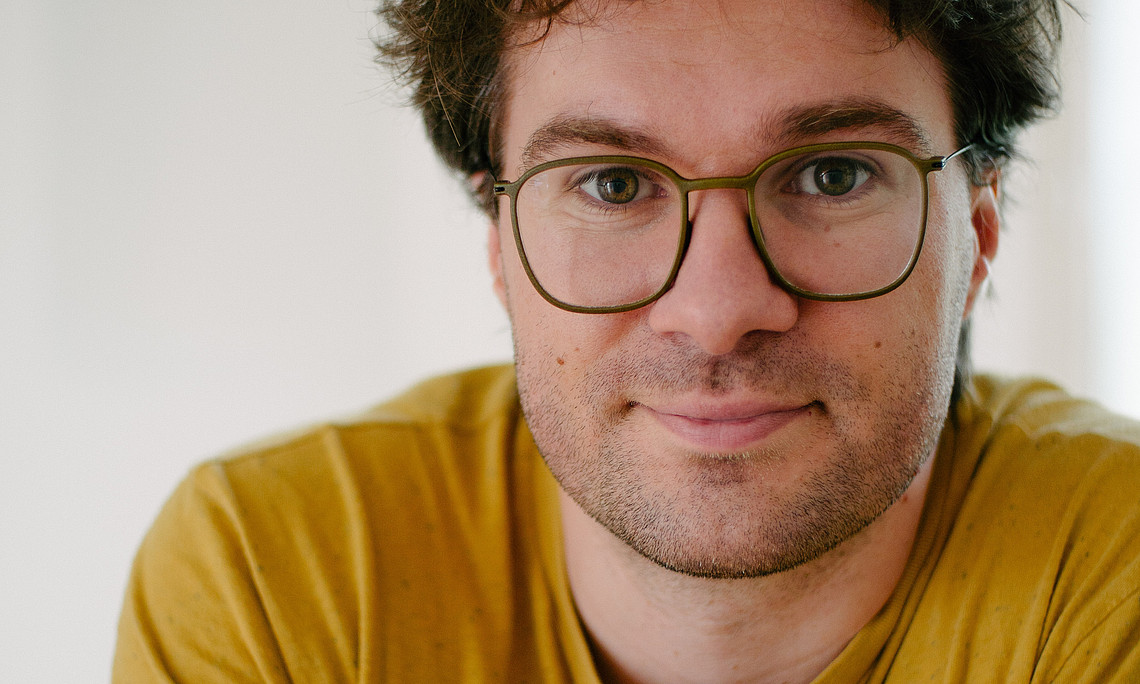
Physisist Peter Puschnig in front of his institute building. ©Uni Graz/Eklaude

Physisist Peter Puschnig makes electrones visible. Photo: Uni Graz/Eklaude

Highest EU funding for electron recordings in slow motion

What happens when a ray of sunlight hits a solar cell? Within an ultra-short time, the light separates the electrons and thus produces electricity. To be able to observe and even control this process, one needs highly resolved images in the nanometre and attosecond range - that is 0.0000000000000001 seconds. A team of physicists from Graz, Jülich and Regensburg has received an ERC Synergy Grant - one of the highest grants awarded by the European Research Council - for the development of such a method.

Electrons do not have a fixed location within atoms and molecules, but buzz around in certain areas of space - the so-called orbitals. "These are the key to better understanding chemical reactions and processes such as those that occur in quantum computers or solar cells," describes Peter Puschnig from the Institute of Physics at the University of Graz. He played a major role in developing a method for reconstructing electron orbitals from measurement data. In the now funded joint project "Orbital Cinema", the physicists are going one step further: "We want to see, as if in slow motion, how orbitals change when, for example, chemical bonds form or break or charges separate," explains Puschnig.

The big challenge is the time resolution required for this. "An attosecond relates to a second like the blink of an eye to the age of our solar system," the researcher illustrates. In Regensburg, a special experiment is being set up for this purpose. With it, the movement of the electrons can not only be observed, but even controlled. "So we succeed in manipulating quantum states and influencing the interaction between light and electrons - which in turn could become relevant for optimised solar cells," says the physicist.

Peter Puschnig contributed the theoretical foundations to the joint project. In addition, his simulation methods play a decisive role in the interpretation of the experiments conducted by the groups of Ulrich Höfer, Rupert Huber and project coordinator Stefan Tautz in Regensburg. The "Orbital Cinema" project has been selected as one of 29 for funding from around 360 applications in a three-stage procedure. The researchers will receive a total of eleven million euros for six years, 1.9 million of which will go to Graz.


(Kopie 19)

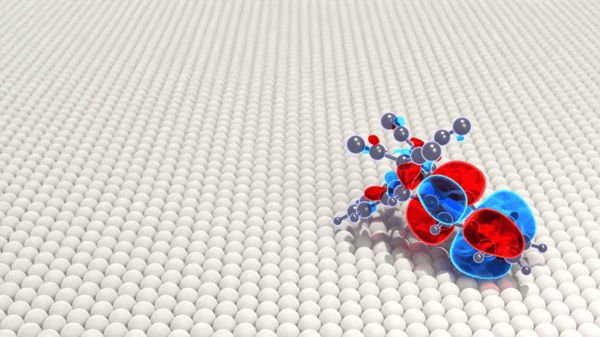
Presentation of oribtals
Incredibly small and incredibly fasts: Physisists have succeeded in showing oribtals. Graphics: Markus Huber/Universität Regensburg

(Kopie 19)

created by Dagmar Eklaude

Related news

Teaching vignettes for working with Arduino in teacher education

The field of physics education focuses, among other things, on how pre-service teachers can be supported in using digital media effectively in science education. One area of research specifically addresses digital data acquisition using Arduino microcontrollers.

Flawlessness defying imperfection

Researchers from the OpNaQ group (Banzer) at the University of Graz and international partners have demonstrated a miniaturized silicon‑nitride photonic chip that can precisely measure the polarization of visible light, even though some of its own components are imperfect. The work, published recently in Advanced Photonics Nexus, demonstrates a new class of passive, compact, and high‑speed on‑chip polarimeters designed for applications ranging from biomedical imaging to quantum communication.

How Do Adolescents Evaluate the Credibility of Instagram Posts?

A new article has been published in the Journal of Baltic Science Education.

Shaping the Future of Sensing, Together

The Christian Doppler Laboratory for Structured Matter Based Sensing (CDL-SMBS) is entering a new phase following its successful first evaluation at the end of 2024, and two expansions in 2024 and more recently in 2026.

Begin of page section:
Additional information:

University of Graz
Universitaetsplatz 3
8010 Graz
Austria
  • Contact
  • Web Editors
  • Moodle
  • UNIGRAZonline
  • Imprint
  • Data Protection Declaration
  • Accessibility Declaration
Weatherstation
Uni Graz

End of this page section. Go to overview of page sections

End of this page section. Go to overview of page sections

Begin of page section:

End of this page section. Go to overview of page sections