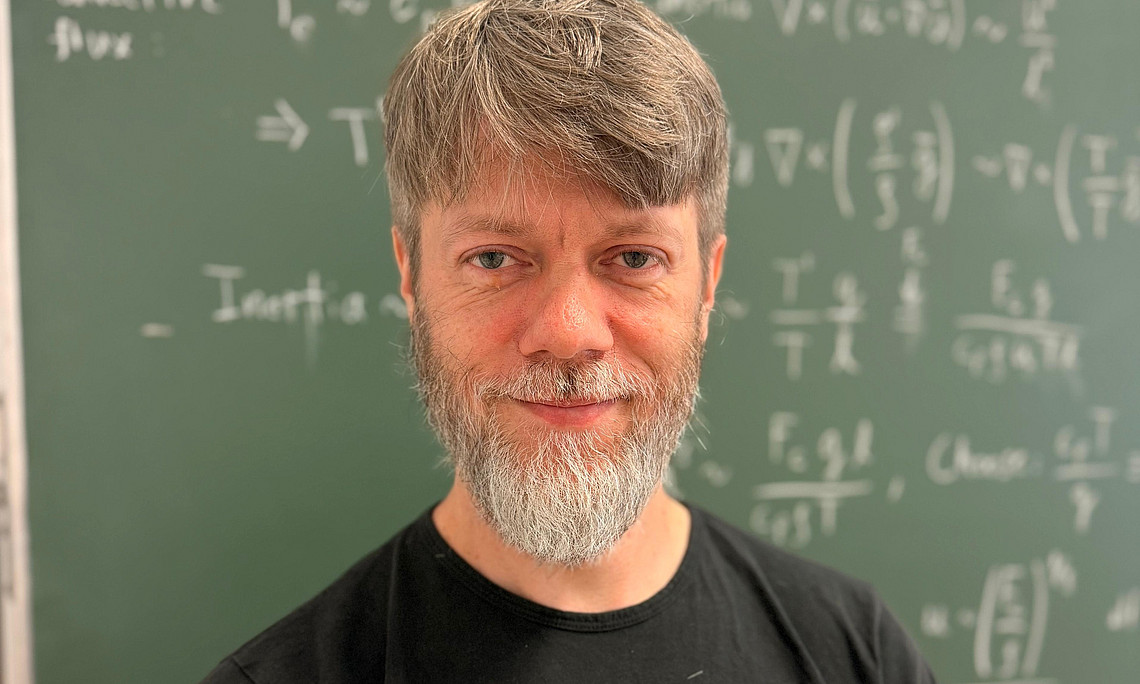




The Spanish Ramón y Cajal award includes a five-year tenure-track position, along with a research budget, at a Spanish research institution. Pamina M. Winkler impressed the selection committee with her work investigating the dynamics of proteins when exposed to molecular "influencers." Her goal is to understand how the dynamic behavior of proteins, lipids, and other molecules regulates spatiotemporal organization and, ultimately, determines biological functions. Much of this remains poorly understood, and the open questions require a combination of methods from biophysics, microscopy, and physical chemistry.
It is precisely this interdisciplinary research portfolio that distinguishes Pamina M. Winkler. In 2015, she completed her physics degree at the University of Graz, with a master’s thesis conducted within the Institute of Physics’ Nanooptics group, in collaboration with the Université Paris-Diderot. For her doctoral studies (2015–2020), she moved to the ICFO in Barcelona, where she visualized the dynamics of biological membranes in living cells at the nanometer scale. To achieve this, she combined planar plasmonic gold antennas with fluorescence correlation spectroscopy and atomic force microscopy. Her work earned her the ICFO Thesis Award (2020) and the UPC Special Doctoral Award (2022).
In 2021, Pamina M. Winkler moved to EPFL (Lausanne) to join the group of Prof. Stellacci, where she expanded her expertise in methods of physical chemistry and biophysics. Leading the research alongside her colleagues, she demonstrated that amino acids can stabilize weakly interacting nano-objects such as proteins—a finding published, among others, in the journal Nature (2025). In 2025, she joined the University of Vienna, where she applied her expertise to the study of binding kinetics and the aggregation processes of proteins associated with neurodegenerative diseases.
For her future research endeavors, she chose the Center for Cooperative Research in Biomaterials (CIC biomaGUNE) in San Sebastián, Spain, where she began her work in May 2025 under an Ikerbasque Research Fellowship. CIC biomaGUNE is a renowned research institute with a focus on biofunctional nanomaterials, synthetic bioengineering, and molecular and functional imaging. There, as a tenure-track assistant professor, Pamina M. Winkler is currently establishing her own interdisciplinary research group, which is dedicated to elucidating the dynamics of protein interactions using interdisciplinary methods. A clear objective is to achieve translational advances in biomedicine and for human health.