Begin of page section:
Page sections:

  • Go to contents (Accesskey 1)
  • Go to position marker (Accesskey 2)
  • Go to main navigation (Accesskey 3)
  • Go to sub navigation (Accesskey 4)
  • Go to additional information (Accesskey 5)
  • Go to page settings (user/language) (Accesskey 8)
  • Go to search (Accesskey 9)

End of this page section. Go to overview of page sections

Begin of page section:
Page settings:

English en
Deutsch de
Search
Login

End of this page section. Go to overview of page sections

Begin of page section:
Search:

Search for details about Uni Graz
Close

End of this page section. Go to overview of page sections


Search

Begin of page section:
Main navigation:

Page navigation:

  • University

    University
    • About the University
    • Organisation
    • Faculties
    • Library
    • Working at University of Graz
    • Campus
    Developing solutions for the world of tomorrow - that is our mission. Our students and our researchers take on the great challenges of society and carry the knowledge out.
  • Research Profile

    Research Profile
    • Our Expertise
    • Research Questions
    • Research Portal
    • Promoting Research
    • Research Transfer
    • Ethics in Research
    • Commission for Scientific Integrity
    Scientific excellence and the courage to break new ground. Research at the University of Graz creates the foundations for making the future worth living.
  • Studies

    Studies
    • Prospective Students
    • Students
  • Community

    Community
    • International
    • Location
    • Research and Business
    • Alumni
    The University of Graz is a hub for international research and brings together scientists and business experts. Moreover, it fosters the exchange and cooperation in study and teaching.
Topics
  • Sustainable University
  • Researchers answer
  • Work for us
Close menu

End of this page section. Go to overview of page sections

Begin of page section:
You are here:

University of Graz Natural sciences Institute of Physics News Abgestürzt (German only)
  • About the institute
  • Our research
  • Personalities
  • Student Services
  • News
  • Events

End of this page section. Go to overview of page sections

Friday, 11 February 2022

Abgestürzt (German only)

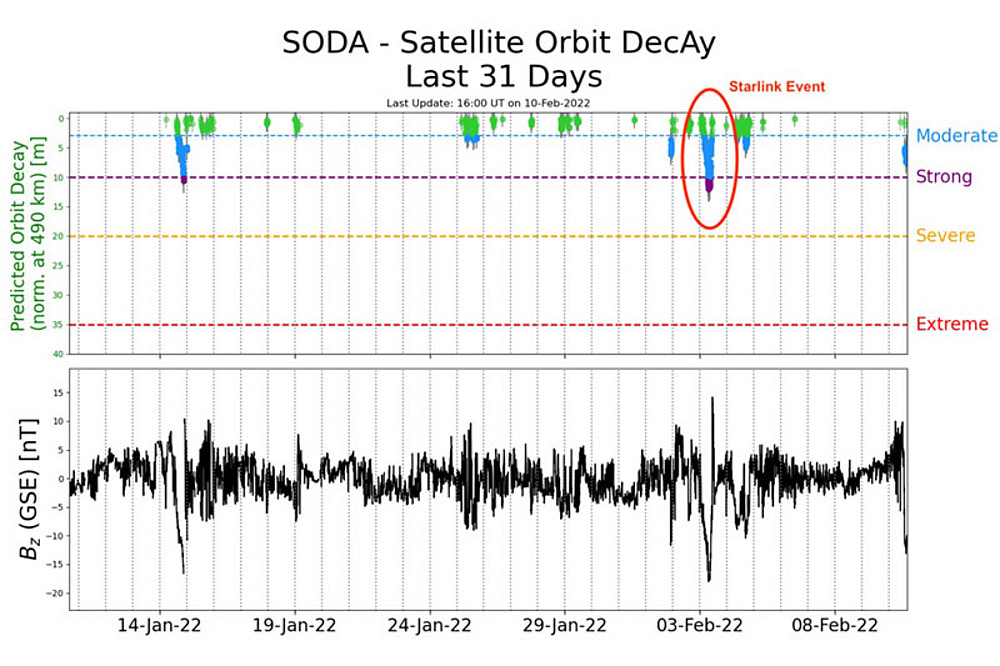
Abbildung 1: ESA Service „SODA“ – neu entwickelt in der ESA Ionospheric Weather Expert Service Gruppe der TU und UNI Graz. Bild: Uni Graz/Drescher ©Uni Graz/Drescher

Abbildung 1: ESA Service „SODA“ – neu entwickelt in der ESA Ionospheric Weather Expert Service Gruppe der TU und UNI Graz. Bild: Uni Graz/Drescher

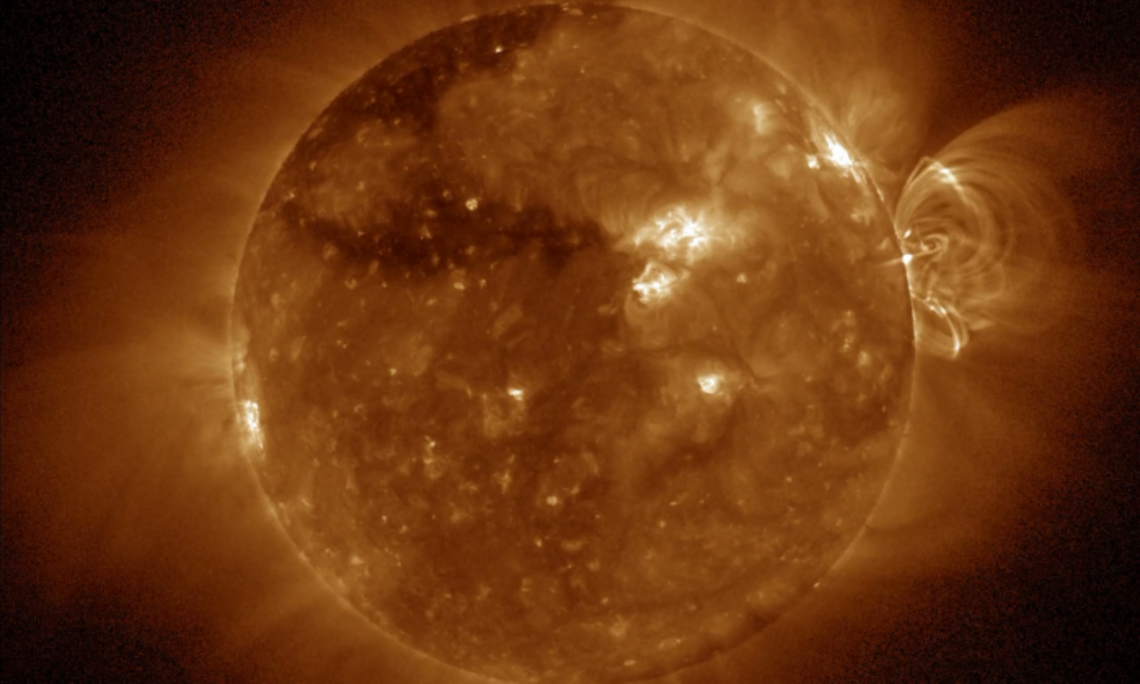
Abbildung 2: STEREO-A Koronographenbild am 30.1.2022. Bild: JHelioviewer/Temmer ©Uni Graz/Drescher

Abbildung 2: STEREO-A Koronographenbild am 30.1.2022. Bild: JHelioviewer/Temmer

Starlink Event – TU/UNI Graz ESA Service „SODA“ zeigt Orbitverlust moderat bis stark

Die Sonnenaktivität hat direkten Einfluss auf die Variation der neutralen Dichte der Thermosphäre der Erde. Treffen aufgrund koronaler Massenauswürfe starke Magnetfeldstrukturen an der Erde ein, nimmt die Thermosphärendichte zu, sodass Satelliten in ihrer Umlaufbahn abfallen können. So geschehen am 3. Februar 2022. Laut SpaceX Information sind 40 der 49 kleinen Starlink Satelliten, die erst kurz davor gestartet wurden, wieder in der Atmosphäre verglüht.

Abbildung 1 zeigt die Ergebnisse des neuen ESA Services „SODA“ (Solar Orbit DecAy), welches gemeinsam von der TU Graz und Uni Graz entwickelt wurde und im Moment im Testbetrieb läuft (FFG Projekt SWEETS mit PI Sandro Krauss von der TU, und Co-PI Manuela Temmer von der UG). Die berechneten Orbithöhenverluste von Satelliten in einer Höhe von 490 km ergaben einen Abfall von circa 15m, was einen moderaten bis starken Einfluss zeigt. Für die Starlink Satelliten, welche sich in niedrigeren Höhen befanden, war dies anscheinend zu stark. Der Widerstand der Atmosphärendichte hat zu ihrem Absturz geführt. 

Der Auslöser für dieses Ereignis war ein Aktivitätsereignis auf der Sonne, welches mit einem schnellen koronalen Massenauswurf (englisch: CME) verknüpft war. Am 30. Jänner 2022 wurde von den Koronographenbildern des NASA STEREO-A Satelliten ein erdgerichteter koronaler Massenauswurf beobachtet (siehe Abbildung 2). Die berechnete Geschwindigkeit war vermutlich bis zu 1200 km/s(!). Der Auswurf hatte seine Quellregion (M1.1 Flare) fast zentral auf der Sonne.

created by Manuela Temmer

Related news

Teaching vignettes for working with Arduino in teacher education

The field of physics education focuses, among other things, on how pre-service teachers can be supported in using digital media effectively in science education. One area of research specifically addresses digital data acquisition using Arduino microcontrollers.

Flawlessness defying imperfection

Researchers from the OpNaQ group (Banzer) at the University of Graz and international partners have demonstrated a miniaturized silicon‑nitride photonic chip that can precisely measure the polarization of visible light, even though some of its own components are imperfect. The work, published recently in Advanced Photonics Nexus, demonstrates a new class of passive, compact, and high‑speed on‑chip polarimeters designed for applications ranging from biomedical imaging to quantum communication.

How Do Adolescents Evaluate the Credibility of Instagram Posts?

A new article has been published in the Journal of Baltic Science Education.

Shaping the Future of Sensing, Together

The Christian Doppler Laboratory for Structured Matter Based Sensing (CDL-SMBS) is entering a new phase following its successful first evaluation at the end of 2024, and two expansions in 2024 and more recently in 2026.

Begin of page section:
Additional information:

University of Graz
Universitaetsplatz 3
8010 Graz
Austria
  • Contact
  • Web Editors
  • Moodle
  • UNIGRAZonline
  • Imprint
  • Data Protection Declaration
  • Accessibility Declaration
Weatherstation
Uni Graz

End of this page section. Go to overview of page sections

End of this page section. Go to overview of page sections

Begin of page section:

End of this page section. Go to overview of page sections